
Search Result
Found "3416" results return by the query.
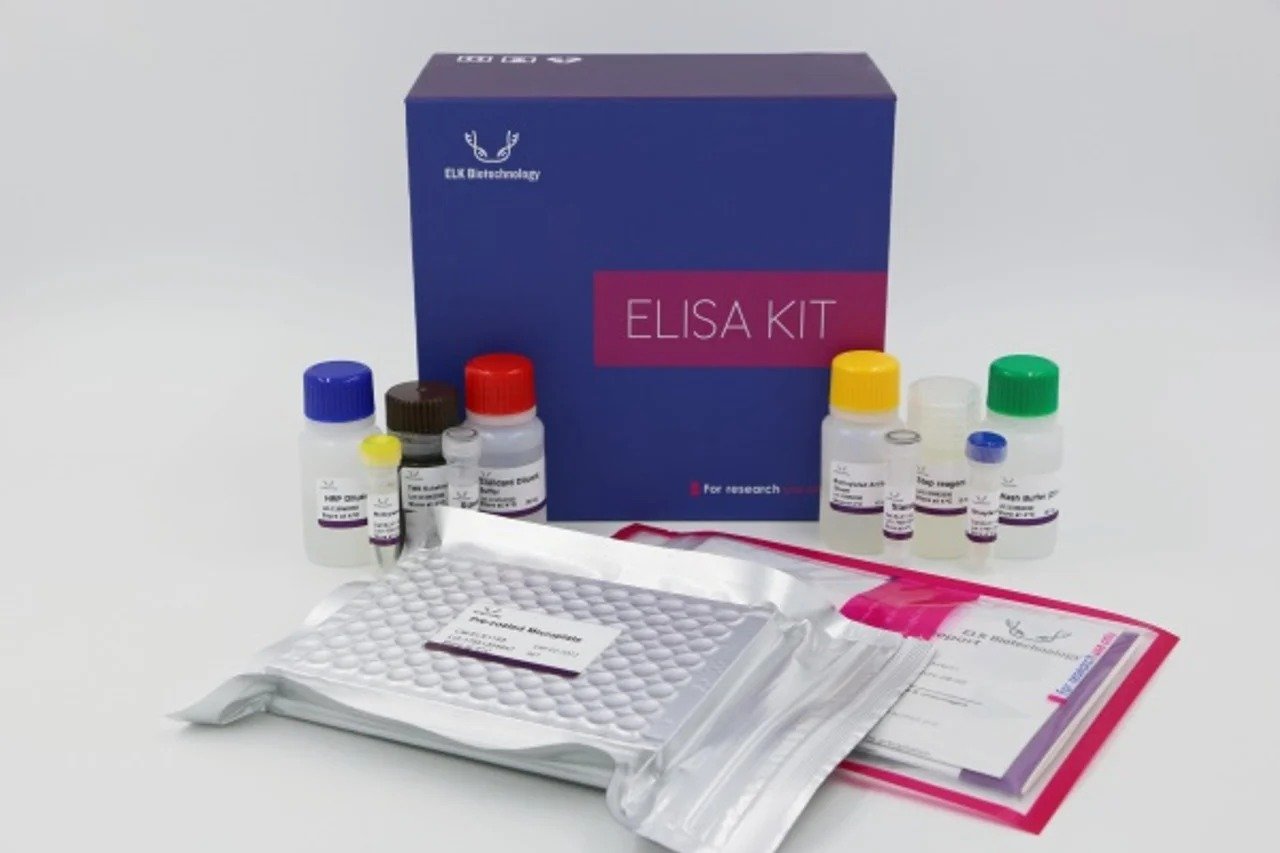
Manufacturer: Elk Biotechnology
The test principle applied in this kit is Sandwich enzyme immunoassay. The microtiter plate provided in this kit has been pre-coated with an antibody specific to Human MBL. Standards or samples are added to the appropriate microtiter plate wells then with a biotin-conjugated antibody specific to Human MBL. Next, Avidin conjugated to Horseradish Peroxidase (HRP) is added to each microplate well and incubated. After TMB substrate solution is added, only those wells that contain Human MBL, biotin-conjugated antibody and enzyme-conjugated Avidin will exhibit a change in color. The enzyme-substrate reaction is terminated by the addition of sulphuric acid solution and the color change is measured spectrophotometrically at a wavelength of 450nm ± 10nm. The concentration of Human MBL in the samples is then determined by comparing the OD of the samples to the standard curve.

Manufacturer: Elk Biotechnology
The test principle applied in this kit is Sandwich enzyme immunoassay. The microtiter plate provided in this kit has been pre-coated with an antibody specific to Human APOE. Standards or samples are added to the appropriate microtiter plate wells then with a biotin-conjugated antibody specific to Human APOE. Next, Avidin conjugated to Horseradish Peroxidase (HRP) is added to each microplate well and incubated. After TMB substrate solution is added, only those wells that contain Human APOE, biotin-conjugated antibody and enzyme-conjugated Avidin will exhibit a change in color. The enzyme-substrate reaction is terminated by the addition of sulphuric acid solution and the color change is measured spectrophotometrically at a wavelength of 450nm ± 10nm. The concentration of Human APOE in the samples is then determined by comparing the OD of the samples to the standard curve.

Manufacturer: Elk Biotechnology
The test principle applied in this kit is Sandwich enzyme immunoassay. The microtiter plate provided in this kit has been pre-coated with an antibody specific to Human IFNb. Standards or samples are added to the appropriate microtiter plate wells then with a biotin-conjugated antibody specific to Human IFNb. Next, Avidin conjugated to Horseradish Peroxidase (HRP) is added to each microplate well and incubated. After TMB substrate solution is added, only those wells that contain Human IFNb, biotin-conjugated antibody and enzyme-conjugated Avidin will exhibit a change in color. The enzyme-substrate reaction is terminated by the addition of sulphuric acid solution and the color change is measured spectrophotometrically at a wavelength of 450nm ± 10nm. The concentration of Human IFNb in the samples is then determined by comparing the OD of the samples to the standard curve.

Manufacturer: Elk Biotechnology
The test principle applied in this kit is Sandwich enzyme immunoassay. The microtiter plate provided in this kit has been pre-coated with an antibody specific to Human GCP2. Standards or samples are added to the appropriate microtiter plate wells then with a biotin-conjugated antibody specific to Human GCP2. Next, Avidin conjugated to Horseradish Peroxidase (HRP) is added to each microplate well and incubated. After TMB substrate solution is added, only those wells that contain Human GCP2, biotin-conjugated antibody and enzyme-conjugated Avidin will exhibit a change in color. The enzyme-substrate reaction is terminated by the addition of sulphuric acid solution and the color change is measured spectrophotometrically at a wavelength of 450nm ± 10nm. The concentration of Human GCP2 in the samples is then determined by comparing the OD of the samples to the standard curve.
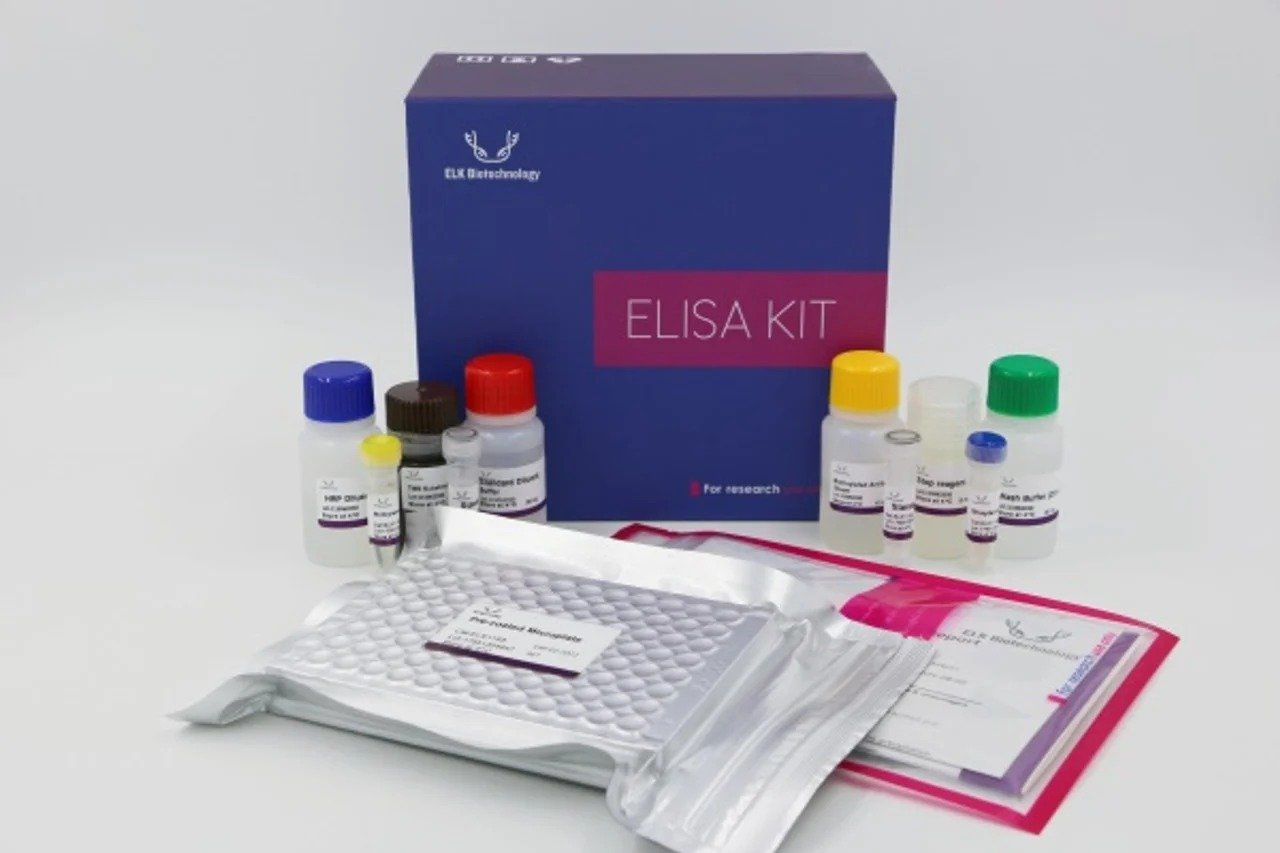
Manufacturer: Elk Biotechnology
The test principle applied in this kit is Sandwich enzyme immunoassay. The microtiter plate provided in this kit has been pre-coated with an antibody specific to Human FceRII. Standards or samples are added to the appropriate microtiter plate wells then with a biotin-conjugated antibody specific to Human FceRII. Next, Avidin conjugated to Horseradish Peroxidase (HRP) is added to each microplate well and incubated. After TMB substrate solution is added, only those wells that contain Human FceRII, biotin-conjugated antibody and enzyme-conjugated Avidin will exhibit a change in color. The enzyme-substrate reaction is terminated by the addition of sulphuric acid solution and the color change is measured spectrophotometrically at a wavelength of 450nm ± 10nm. The concentration of Human FceRII in the samples is then determined by comparing the OD of the samples to the standard curve.

Manufacturer: Elk Biotechnology
The test principle applied in this kit is Sandwich enzyme immunoassay. The microtiter plate provided in this kit has been pre-coated with an antibody specific to Human BLC1. Standards or samples are added to the appropriate microtiter plate wells then with a biotin-conjugated antibody specific to Human BLC1. Next, Avidin conjugated to Horseradish Peroxidase (HRP) is added to each microplate well and incubated. After TMB substrate solution is added, only those wells that contain Human BLC1, biotin-conjugated antibody and enzyme-conjugated Avidin will exhibit a change in color. The enzyme-substrate reaction is terminated by the addition of sulphuric acid solution and the color change is measured spectrophotometrically at a wavelength of 450nm ± 10nm. The concentration of Human BLC1 in the samples is then determined by comparing the OD of the samples to the standard curve.

Manufacturer: Elk Biotechnology
The test principle applied in this kit is Sandwich enzyme immunoassay. The microtiter plate provided in this kit has been pre-coated with an antibody specific to Human CTACK. Standards or samples are added to the appropriate microtiter plate wells then with a biotin-conjugated antibody specific to Human CTACK. Next, Avidin conjugated to Horseradish Peroxidase (HRP) is added to each microplate well and incubated. After TMB substrate solution is added, only those wells that contain Human CTACK, biotin-conjugated antibody and enzyme-conjugated Avidin will exhibit a change in color. The enzyme-substrate reaction is terminated by the addition of sulphuric acid solution and the color change is measured spectrophotometrically at a wavelength of 450nm ± 10nm. The concentration of Human CTACK in the samples is then determined by comparing the OD of the samples to the standard curve.

Manufacturer: Elk Biotechnology
The test principle applied in this kit is Sandwich enzyme immunoassay. The microtiter plate provided in this kit has been pre-coated with an antibody specific to Simian TNFa. Standards or samples are added to the appropriate microtiter plate wells then with a biotin-conjugated antibody specific to Simian TNFa. Next, Avidin conjugated to Horseradish Peroxidase (HRP) is added to each microplate well and incubated. After TMB substrate solution is added, only those wells that contain Simian TNFa, biotin-conjugated antibody and enzyme-conjugated Avidin will exhibit a change in color. The enzyme-substrate reaction is terminated by the addition of sulphuric acid solution and the color change is measured spectrophotometrically at a wavelength of 450nm ± 10nm. The concentration of Simian TNFa in the samples is then determined by comparing the OD of the samples to the standard curve.

Manufacturer: Elk Biotechnology
This assay employs the competitive inhibition enzyme immunoassay technique. The microtiter plate provided in this kit has been pre-coated with Human KLK10. Standards or samples are added to the appropriate microtiter plate wells then with a biotin-conjugated antibody specific to Human KLK10. Next, Avidin conjugated to Horseradish Peroxidase (HRP) is added to each microplate well and incubated. After TMB substrate solution is added. The enzyme-substrate reaction is terminated by the addition of sulphuric acid solution and the color change is measured spectrophotometrically at a wavelength of 450nm ± 10nm. The concentration of Human KLK10 in the samples is then determined by comparing the OD of the samples to the standard curve.