
Search Result
Found "247" results return by the query.

Manufacturer: Elabscience
CD4, also known as T4/Leu-3, is a 55 kD single-chain type I transmembrane glycoprotein and member of the immunoglobulin superfamily. It is expressed on most thymocytes, helper T cells, type II NKT cells, and monocytes/macrophages. CD4 is part of the TCR/CD3 complex, binds to β2 domain from the MHC class II molecule, and participates in TCR signal transduction. CD4 is the receptor of IL-16 and is a coreceptor for the human immunodeficiency virus (HIV) and human herpes virus 7 (HHV-7).

Manufacturer: Elabscience
CD8a is a 32-34 kD type I glycoprotein. It forms a homodimer (CD8a/a) or heterodimer (CD8a/b) with CD8b. CD8, also known as T8 and Leu2, is a member of the immunoglobulin superfamily found on the majority of thymocytes, a subset of peripheral blood T cells, and NK cells (which express almost exclusively CD8a homodimers). CD8 acts as a co-receptor with MHC class I-restricted T cell receptors in antigen recognition and T cell activation and has been shown to play a role in thymic differentiation. Two domains in CD8a are important for function: the extracellular IgSF domain binds the α3 domain of MHC class I and the cytoplasmic CXCP motif binds the tyrosine kinase p56 Lck.

Manufacturer: Elabscience
Epithelial Cell Adhesion Molecule (EpCAM) , also known as GA733-2 antigen , is a type I transmembrane glycoprotein composed of an extracellular domain with two EGF-Like repeats and a cystenin-rich region , a transmembrane domain and a cytoplasmic domain. It modulates cell adhesion and proliferation. Its overexpression has been detected in many epithelial tumours and has been associated with high stage , high grade and a worse survival in some tumour types. EpCAM has been shown to function as a calcium-independent homophilic cell adhesion molecule that does not exhibit any obvious relationship to the four known cell adhesion molecule superfamilies. However , recent insights have revealed that EpCAM participates in not only cell adhesion , but also in proliferation , migration and differentiation of cells. In addition , recent study revealed that EpCAM is the Wnt-beta-catenin signaling target gene and may be used to facilitate prognosis. It has oncogenic potential and is activated by release of its intracellular domain , which can signal into the cell nucleus by engagement of elements of the wnt pathway.

Manufacturer: Elabscience
Alpha-amylase is the major form of amylase found in humans and other mammals. Amylases are secreted proteins that hydrolyze 1,4-alpha-glucoside bonds in oligosaccharides and polysaccharides, and thus catalyze the first step in digestion of dietary starch and glycogen. Alpha-amylase hydrolyses alpha bonds of large, alpha-linked polysaccharides, such as starch and glycogen, yielding glucose and maltose. Amylases is widely expressed and is most prominent in pancreatic juice and saliva, each of which has its own isoform of human α-amylase. They behave differently on isoelectric focusing, and can also be separated in testing by using specific monoclonal antibodies.

Manufacturer: Finetest
This kit is based on Double antibody-Sandwich ELISA detection method and takes 4h assay time. The microplate provided in this kit has been precoated with anti Ki67 antibody. Read the O.D. absorbance at 450nm in a microplate reader. Calculate the concentration of Ki67 in the sample by plotting standard curve. The concentration of the target substance is proportional to the OD450 value.

Manufacturer: Finetest
The Rat PRL (Prolactin) ELISA Kit from FineTest is designed for the quantitative measurement of prolactin levels in rat serum, plasma, and other biological fluids. This assay utilizes the sandwich ELISA principle, employing specific antibodies to detect prolactin with high sensitivity and specificity. The kit includes pre-coated 96-well plates, standards, detection reagents, and all necessary components for the assay. It offers a user-friendly protocol with an assay time of approximately 3 hours. The detection range typically spans from 15.6 pg/mL to 1000 pg/mL, with a sensitivity of less than 9.4 pg/mL. This kit is suitable for research applications involving prolactin-related studies in rats.
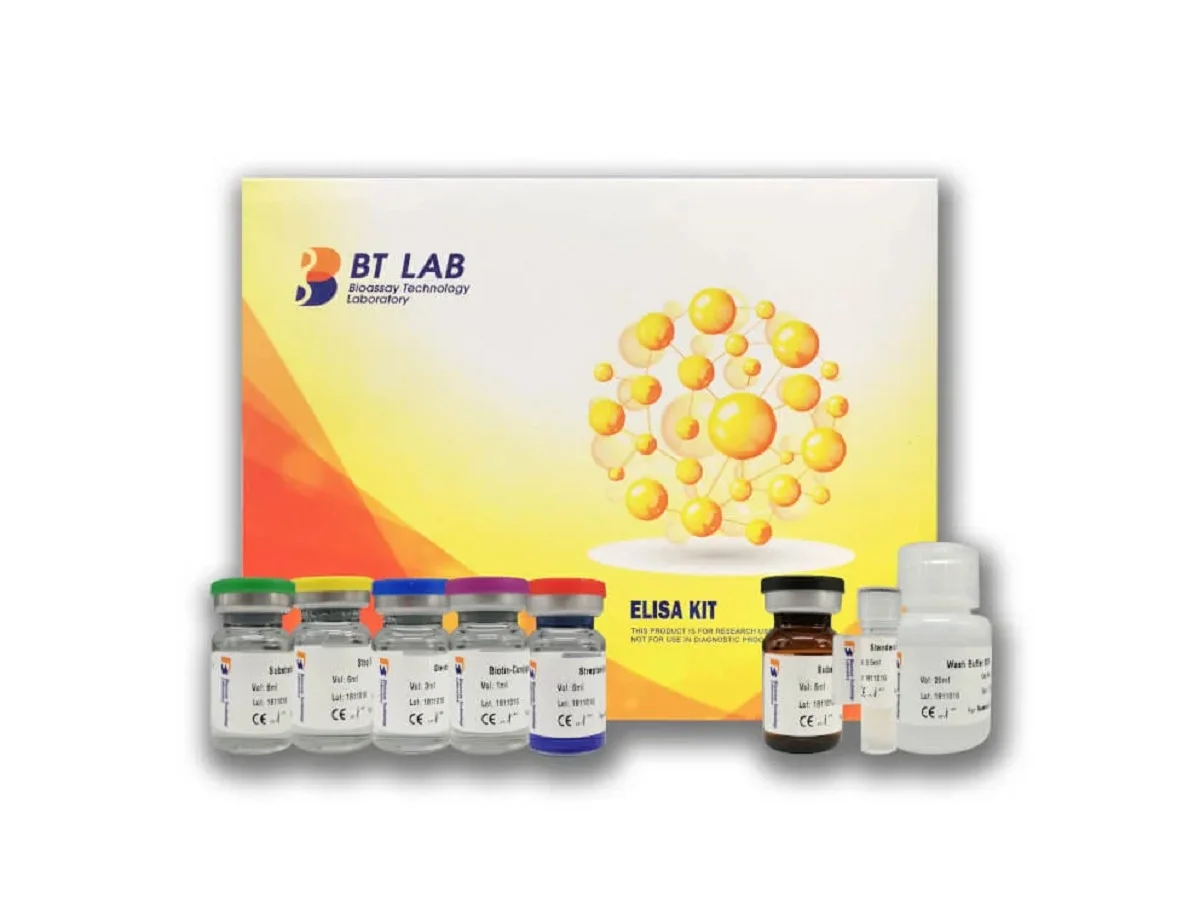
Manufacturer: BT Lab
This kit is an Enzyme-Linked Immunosorbent Assay (ELISA). The plate has been pre-coated with Human GDNF antibody. GDNF present in the sample is added and binds to antibodies coated on the wells. And then biotinylated Human GDNF Antibody is added and binds to GDNF in the sample. Then Streptavidin-HRP is added and binds to the Biotinylated GDNF antibody. After incubation unbound Streptavidin-HRP is washed away during a washing step. Substrate solution is then added and color develops in proportion to the amount of Human GDNF

Manufacturer: Sunlong Biotech
The ELISA is based on the competitive binding enzyme immunoassay technique. The microtiter plate provided in this kit has been pre-coated with an antibody specific to General VAL, During the reaction, General VAL in the sample or standard competes with a fixed amount of biotin-labeled General VAL for sites on a pre-coated Monoclonal antibody specific to General VAL. Excess conjugate and unbound sample or standard are washed from the plate. Next, Avidin conjugated to Horseradish Peroxidase (HRP) is added to each microplate well and incubated. Then a TMB substrate solution is added to each well. The enzyme-substrate reaction is terminated by the addition of a sulphuric acid solution and the color change is measured spectrophotometrically at a wavelength of 450 nm ± 2 nm. The concentration of General VAL in the samples is then determined by comparing the O.D. of the samples to the standard curve.
Manufacturer: Cloud Clone
The antibody is a mouse monoclonal antibody raised against TUBb3. It has been selected for its ability to recognize TUBb3 in immunohistochemical staining and western blotting.