
Search Result
Found "341" results return by the query.
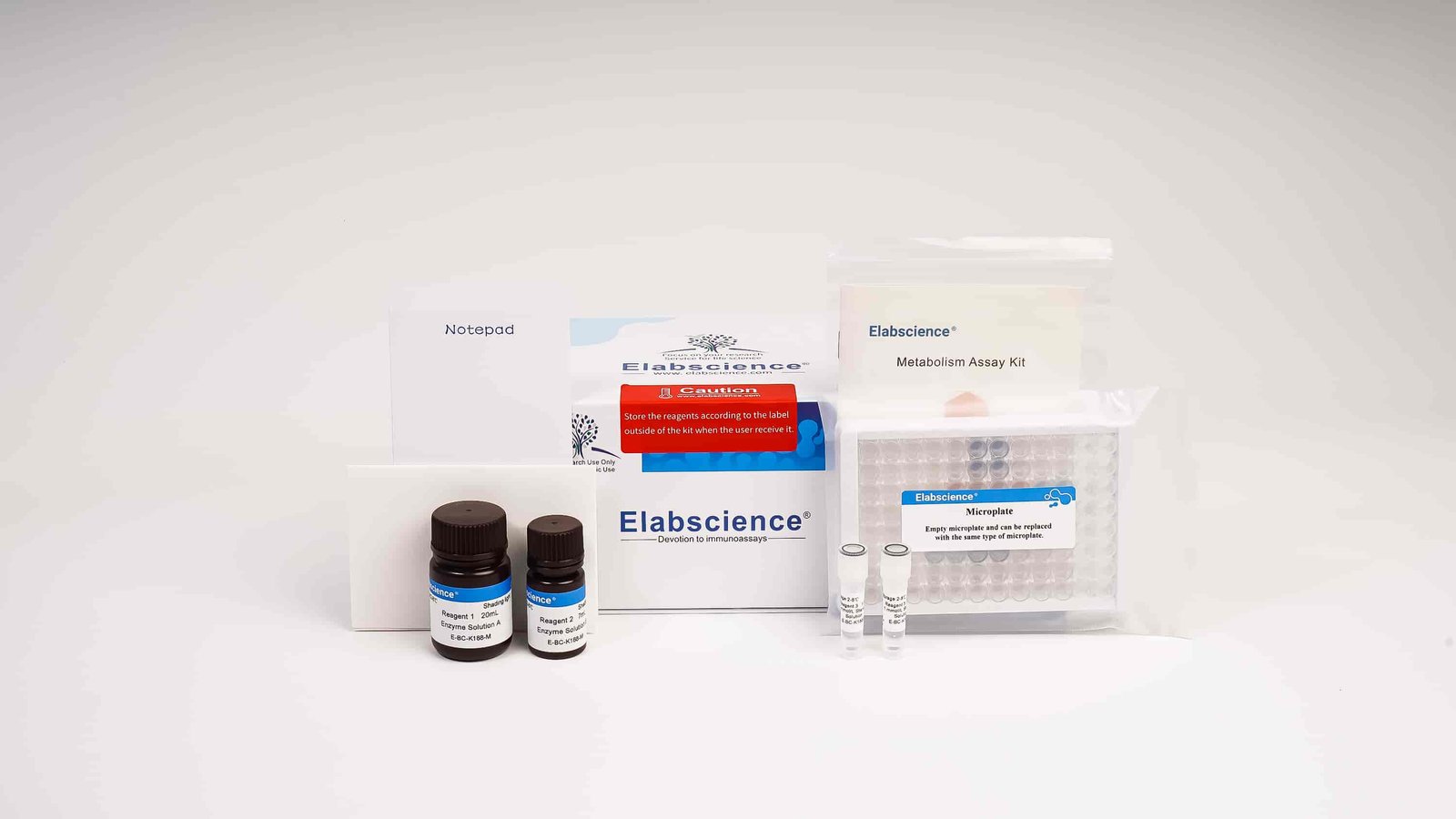
Manufacturer: Elabscience
Mitochondrial oxidative phosphorylation consumes oxygen to produce ATP, which provides energy for cell growth. Therefore, detection of cellular oxygen consumption is a key indicator of mitochondrial function. The kit provides a fluorescent probe, which is sensitive to oxygen. The fluorescence of the probe increases with the decrease of oxygen in a closed environment, and the oxygen consumption rate of cells is judged by detecting the change of the fluorescence value.

Manufacturer: Elabscience
Lipoxygenase (LOX) is an iron-containing oxidoreductase found in plants and animals. The detection principle of this kit is as follows: LOX catalyzes the oxidation of arachidonic acid to produce fluorescence products, and the enzyme activity of LOX can be calculated according to the change of fluorescence value of fluorescence products at the excitation wavelength of 507 nm and the emission wavelength of 547 nm within a unit time.

Manufacturer: Elabscience
Fatty acid oxidation (FAO) is the main pathway of fatty acid decomposition in the body, which can supply a large amount of energy required by the organism. FAO is also the transformation process of fatty acids. The length of fatty acid chain required by the organism is different. Through oxidation, long-chain fatty acids can be transformed into fatty acids with suitable growth degree for the organism metabolism. The detection principle of this kit: FAO process consumes the substrate and NAD+, and generates NADH. Under the action of electron coupling agent and chromogenesis agent, the orange red substance is generated, which can be detected at 450 nm.
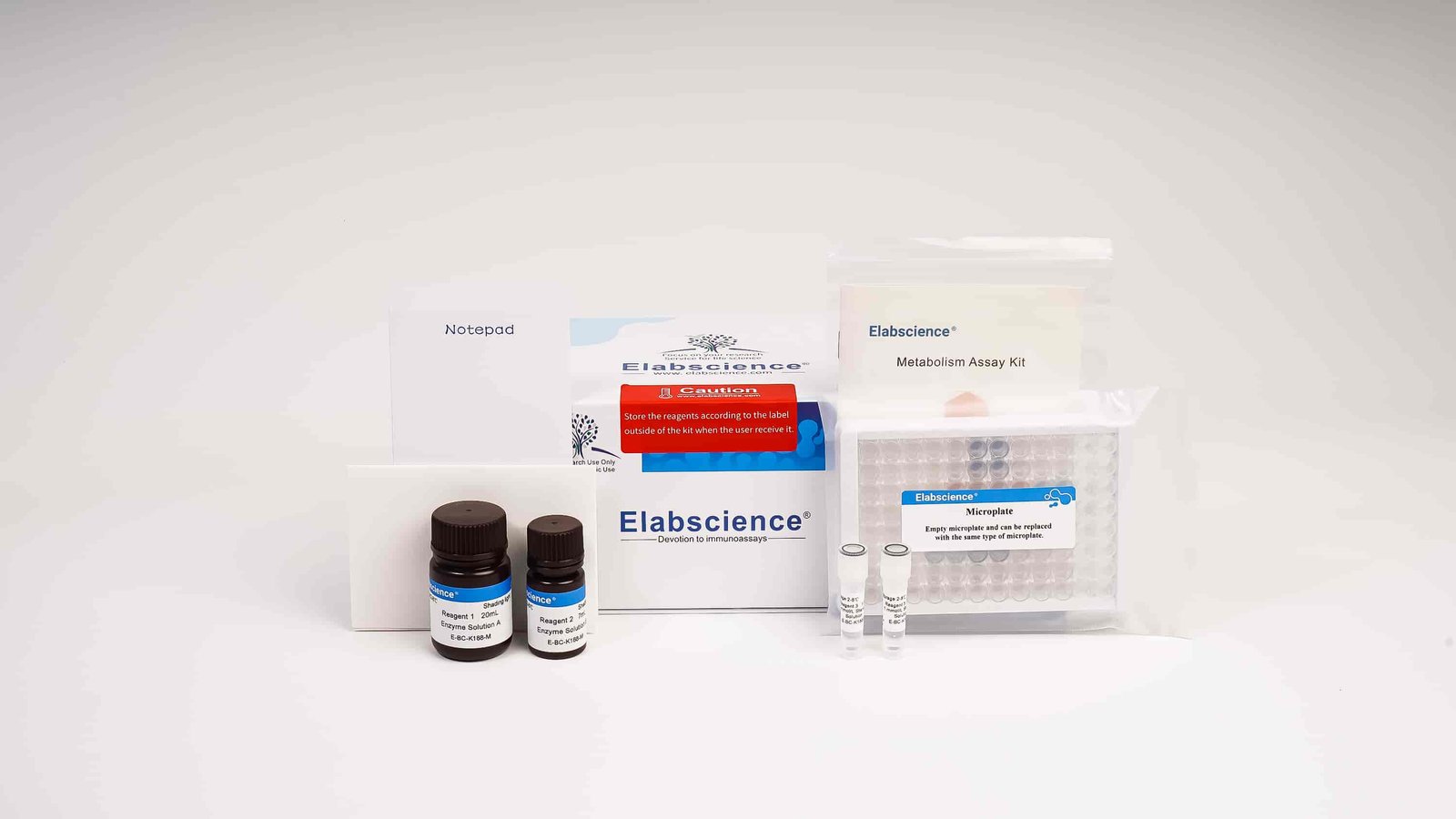
Manufacturer: Elabscience
Acetyl-CoA is an essential cofactor and acyl carrier in the enzymatic acetyl transfer reaction. It can be formed by oxidative decarboxylation of pyruvate in mitochondria, oxidation of long-chain fatty acids, or oxidative degradation of certain amino acids. Acetyl-CoA is the starting compound of the citric acid cycle. The detection principle of this kit is that Acetyl-CoA is converted into other substances under the condition of enzyme catalysis, and the resulting fluorescence is detected by fluorescence microplate reader at the maximum excitation wavelength of 535 nm and the maximum emission wavelength of 587 nm.
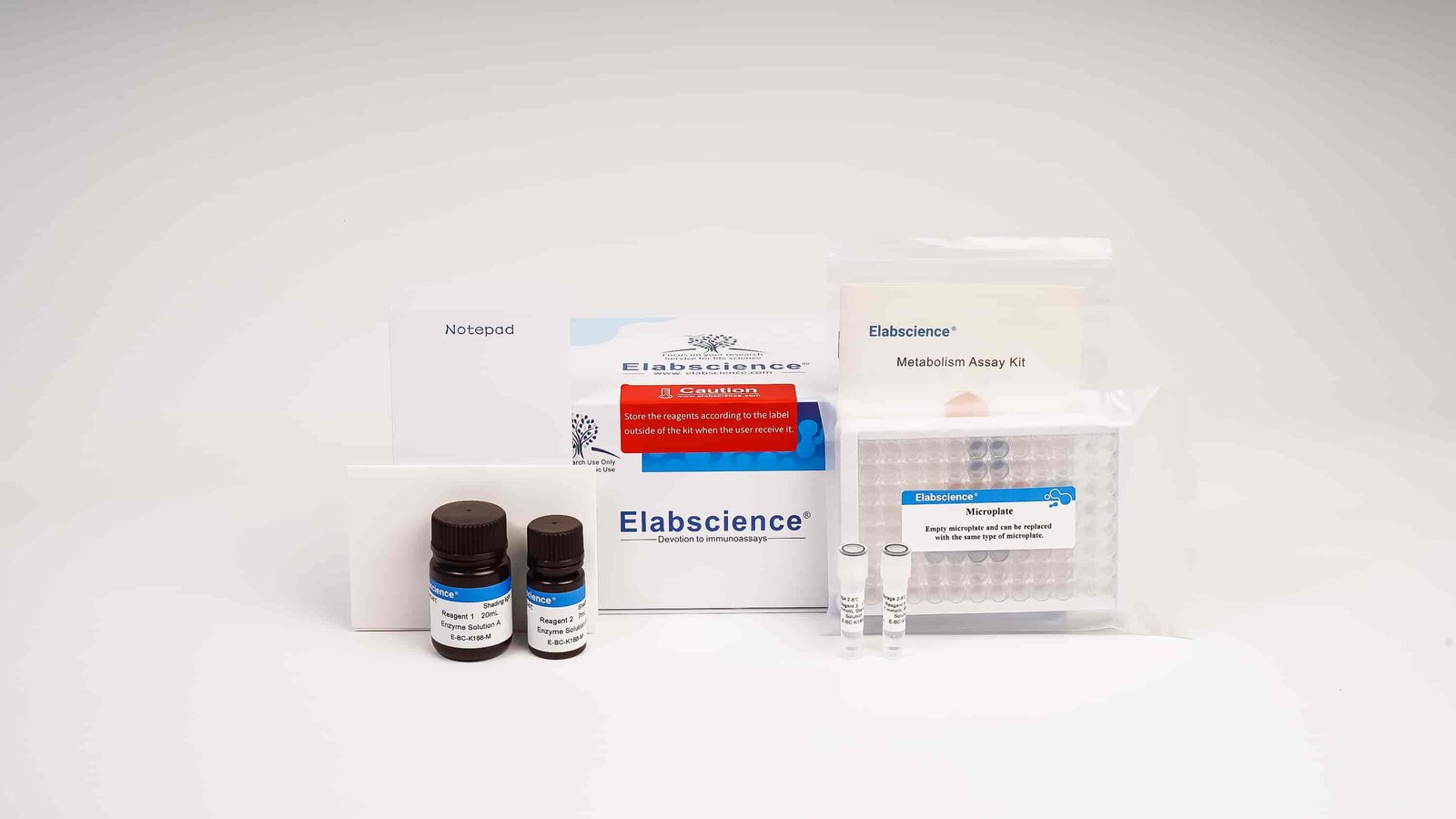
Manufacturer: Elabscience
α-Ketoglutaric acid and alanine can be combined with fluorescent probe products under the action of a series of enzymes. The content of α-ketoglutaric acid in samples can be determined by measuring the fluorescence value.

Manufacturer: Elabscience
The probe in this kit has no fluorescence outside the cell. When it enters the cell, it will emit green fluorescence after hydrolysis by the intracellular ester. The fluorescence peaks at excitation wavelength 490 nm and emission wavelength 525 nm, and the fluorescence intensity is proportional to the calcium ion concentration.

Manufacturer: Elabscience
NADP-MDH catalyzes the conversion of malic acid and NADP+ to oxaloacetic acid and NADPH. NADPH makes WST-8 orange under the action of electron coupling agent. The activity of NADP-MDH can be calculated by measuring the change of absorbance value at 450 nm.
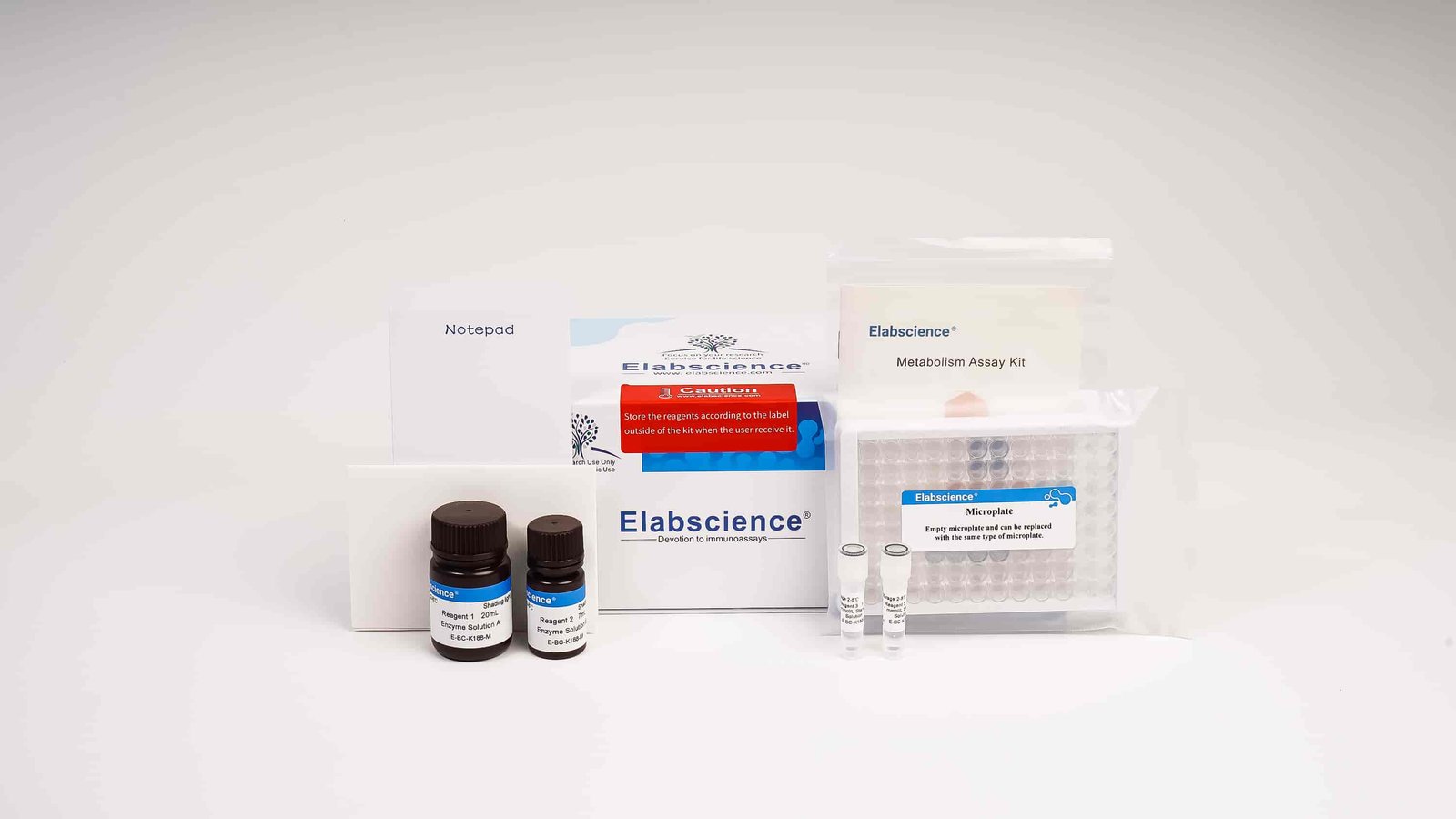
Manufacturer: Elabscience
Mitochondrial complex I catalyzes the reaction of NADH with ubiquinone substrate to generate NAD+ and reduced ubiquinone. The activity of mitochondrial complex I can be quantified by measure the change OD value at 340 nm.

Manufacturer: Elabscience
Mitochondrial complex II, also known as succinate-coenzyme Q reductase, is widely found in the mitochondria of animals, plants, microorganisms and cultured cells. It catalyzes the oxidation of succinic acid in the TCA cycle to fumaric acid, which converts the ubiquinone to a reduced form through the basic unit structures of the complex such as iron-sulfur proteins. Coenzyme Q, the catalytic product of mitochondrial complex II, can further reduce 2,6-dichloroindoxol, which has a characteristic absorption peak at 600 nm. Therefore, the activity of mitochondrial complex II can be quantified by measure the change OD value at 600 nm.