
Search Result
Found "3416" results return by the query.
Manufacturer: Abbkine Scientific
TGFB1 encodes a secreted ligand of the TGF-beta (transforming growth factor-beta) superfamily of proteins. Ligands of this family bind various TGF-beta receptors leading to recruitment and activation of SMAD family transcription factors that regulate gene expression. The encoded preproprotein is proteolytically processed to generate a latencyassociated peptide (LAP) and a mature peptide, and is found in either a latent form composed of a mature peptide homodimer, a LAP homodimer, and a latent TGF-beta binding protein, or in an active form consisting solely of the mature peptide homodimer. The mature peptide may also form heterodimers with other TGFB family members. The Transforming growth factor beta-1 regulates cell proliferation, differentiation and growth, and can modulate expression and activation of other growth factors including interferon gamma and tumor necrosis factor alpha. This gene is frequently upregulated in tumor cells, and mutations in this gene result in Camurati-Engelmann disease
Manufacturer: Abbkine Scientific
TNF encodes a multifunctional proinflammatory cytokine that belongs to the tumor necrosis factor (TNF) superfamily. This cytokine is mainly secreted by macrophages. It can bind to, and thus functions through its receptors TNFRSF1A/TNFR1 and TNFRSF1B/TNFBR. This cytokine is involved in the regulation of a wide spectrum of biological processes including cell proliferation, differentiation, apoptosis, lipid metabolism, and coagulation. This cytokine has been implicated in a variety of diseases, including autoimmune diseases, insulin resistance, and cancer. Knockout studies in mice also suggested the neuroprotective function of this cytokine.

Manufacturer: Affinity Biosciences Antibody
Neurotrophins function to regulate naturally occurring cell death of neurons during development. The prototype neurotrophin is nerve growth factor (NGF), originally discovered in the 1950s as a soluble peptide promoting the survival of, and neurite outgrowth from, sympathetic ganglia. Three additional structurally homologous neurotrophic factors have been identified. These include brain-derived neurotrophic factor (BDNF), neurotrophin-3 (NT-3) and neurotrophin-4 (NT-4) (also designated NT-5). These various neurotrophins stimulate the in vitro survival of distinct, but partially overlapping, populations of neurons. The cell surface receptors through which neurotrophins mediate their activity have been identified.
Manufacturer: UniBiotech
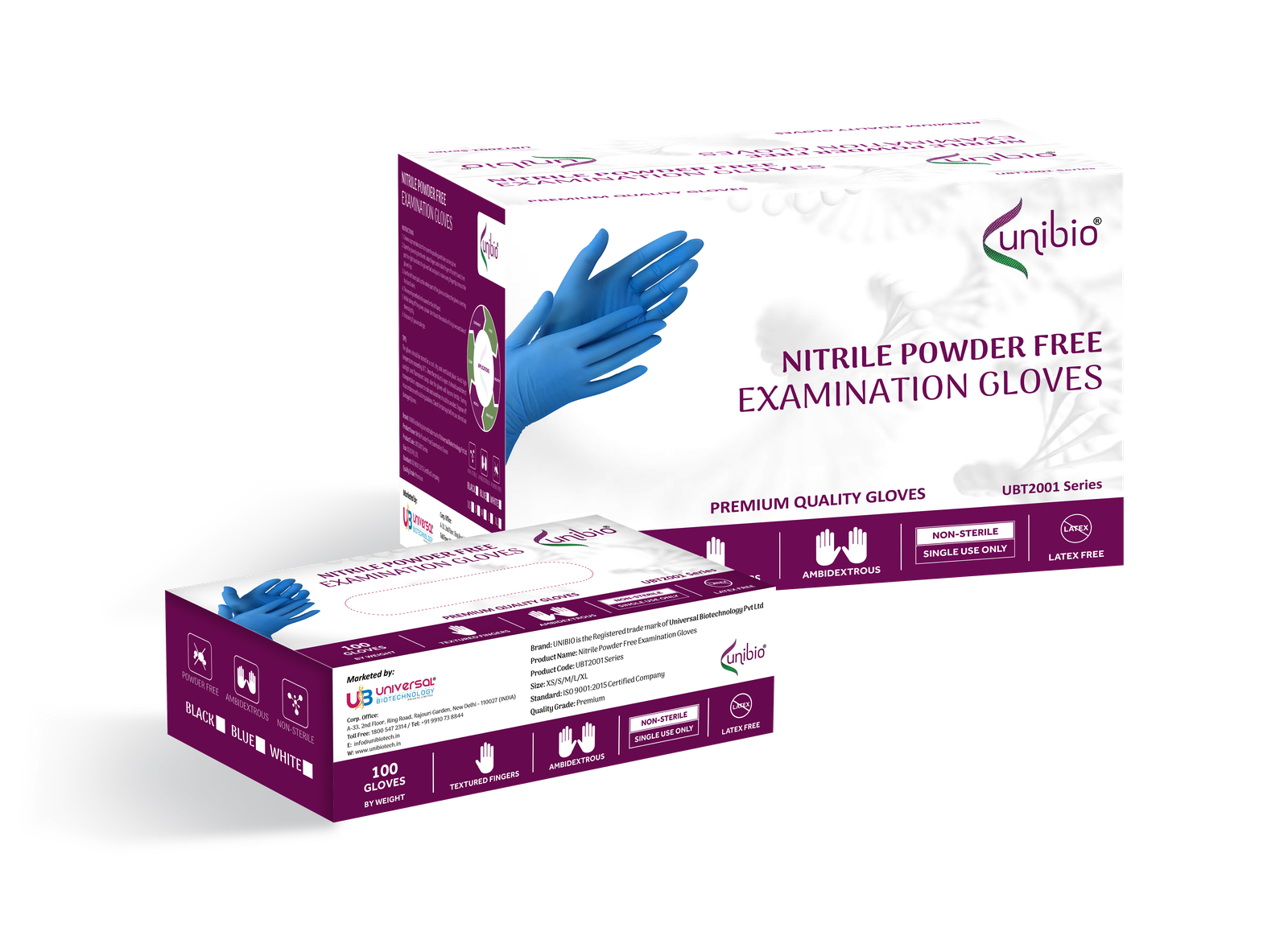
UniBio's Nitrile Powder-Free Examination Gloves are a trusted choice for healthcare professionals, laboratory workers, and anyone in need of reliable hand protection. These gloves are engineered with precision to ensure exceptional quality and performance in various applications.

Manufacturer: Affinity Biosciences Antibody
PECAM-1 is a cell adhesion molecule expressed on platelets and at endothelial cell intercellular junctions.

Manufacturer: Affinity Biosciences Antibody
GCG Glucagon plays a key role in glucose metabolism and homeostasis. Regulates blood glucose by increasing gluconeogenesis and decreasing glycolysis. A counterregulatory hormone of insulin, raises plasma glucose levels in response to insulin-induced hypoglycemia. Plays an important role in initiating and maintaining hyperglycemic conditions in diabetes. Belongs to the glucagon family. Glucagon release is stimulated by hypoglycemia and inhibited by hyperglycemia, insulin, and somatostatin. GLP-1 and GLP-2 are induced in response to nutrient ingestion.

Manufacturer: GeneDireX
GelBLooK is an instrument that combines the gel electrophoresis system with the blue LED transilluminator, designed for nucleic acid electrophoresis experiments.

Manufacturer: Cloud Clone Antibodies
The antibody is a mouse monoclonal antibody raised against EGF. It has been selected for its ability to recognize EGF in immunohistochemical staining and western blotting.
Manufacturer: Cloud Clone Antibodies
The antibody is a mouse monoclonal antibody raised against PRF1. It has been selected for its ability to recognize PRF1 in immunohistochemical staining and western blotting.