
Search Result
Found "341" results return by the query.
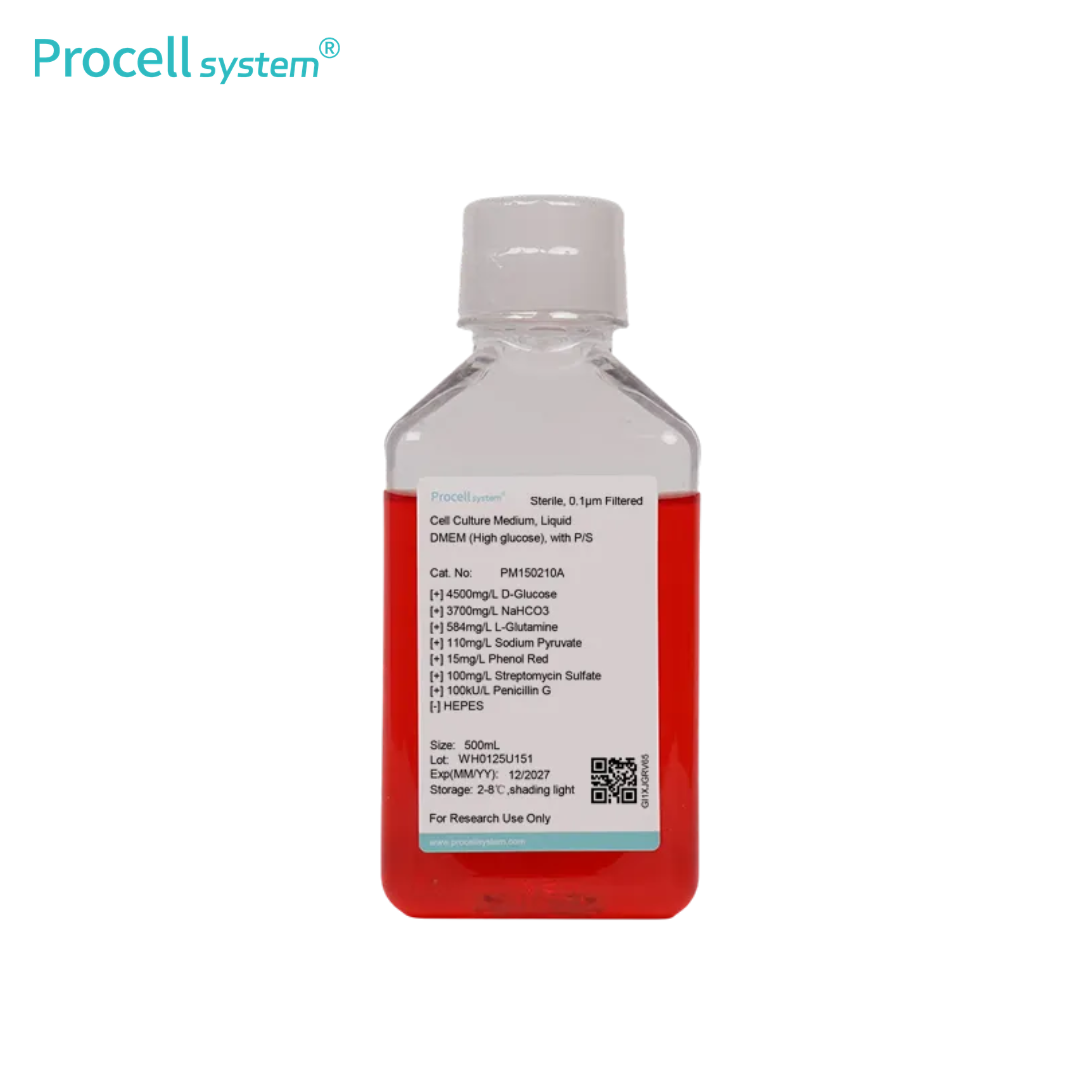
Manufacturer: Procell System
DMEM (Dulbecco's Modified Eagle Medium) was developed on the basis of MEM medium. Compared with MEM medium, the content of amino acid increased by 2 times, the content of vitamin increased by 4 times, and the content of non-essential amino acid, trace iron ion and sodium pyruvate were increased by 4 times. The glucose content of DMEM medium was originally designed as 1000 mg/L (low Glucose type), and then developed into 4500 mg/L (high Glucose type), which has been widely used in cell culture. DMEM (High glucose) was widely used in fast growth, low adhesion cells, hybridoma myeloma cells, clone cells, DNA transfected transformation cells, various primary virus host cells, single cell culture and vaccine production. DMEM (High glucose) contains many kinds of amino acids, vitamins, inorganic salts and other ingredients for cell culture, but does not contain protein, lipids or any growth factors, so the product should be used with serum or serum-free additives.
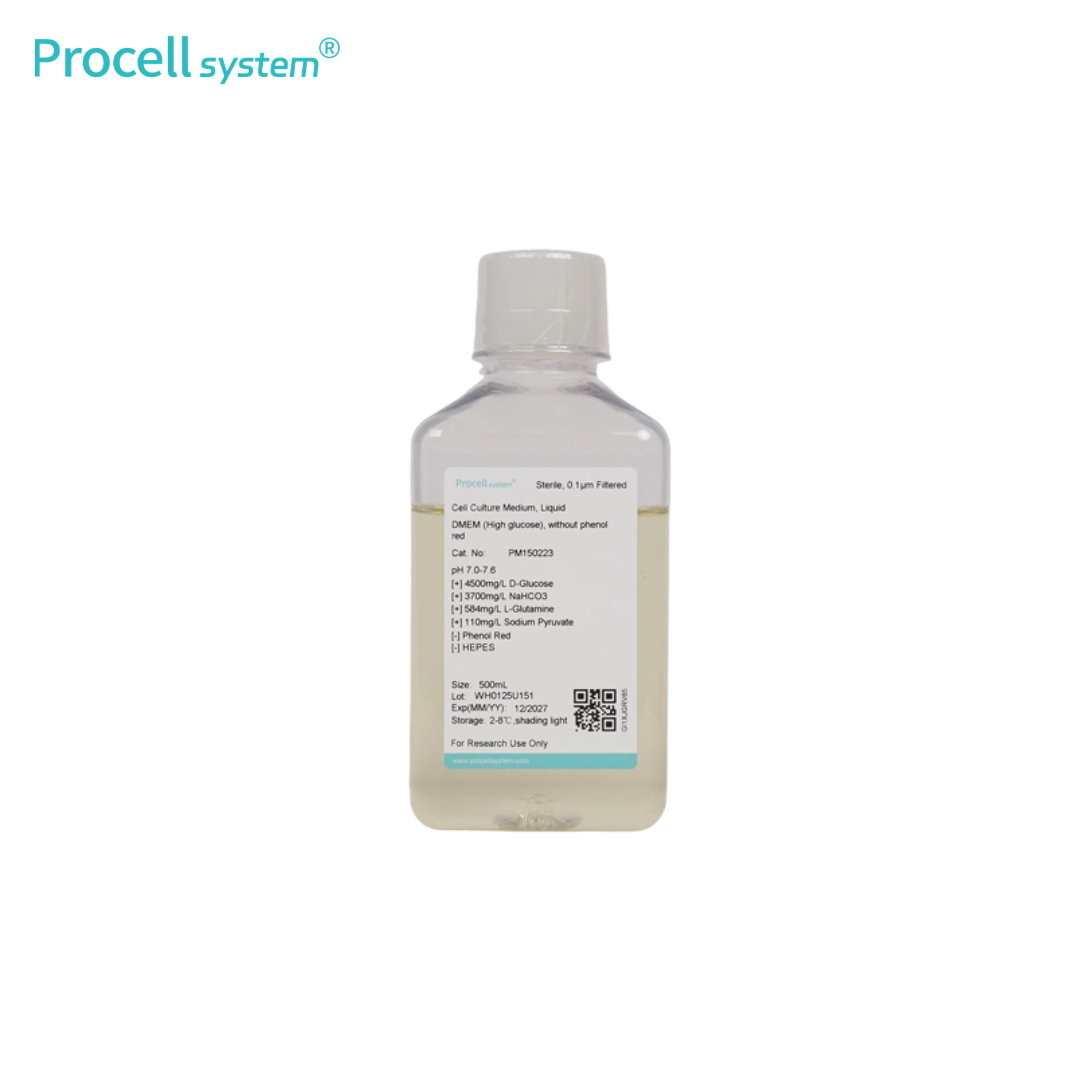
Manufacturer: Procell System
DMEM (Dulbecco's Modified Eagle Medium) was developed on the basis of MEM medium. Compared with MEM medium, the content of amino acid increased by 2 times, the content of vitamin increased by 4 times, and the content of non-essential amino acid, trace iron ion and sodium pyruvate were increased by 4 times. The glucose content of DMEM medium was originally designed as 1000 mg/L (low Glucose type), and then developed into 4500 mg/L (high Glucose type), which has been widely used in cell culture. DMEM (High glucose) was widely used in fast growth, low adhesion cells, hybridoma myeloma cells, clone cells, DNA transfected transformation cells, various primary virus host cells, single cell culture and vaccine production. DMEM (High glucose) contains many kinds of amino acids, vitamins, inorganic salts and other ingredients for cell culture, but does not contain protein, lipids or any growth factors, so the product should be used with serum or serum-free additives.
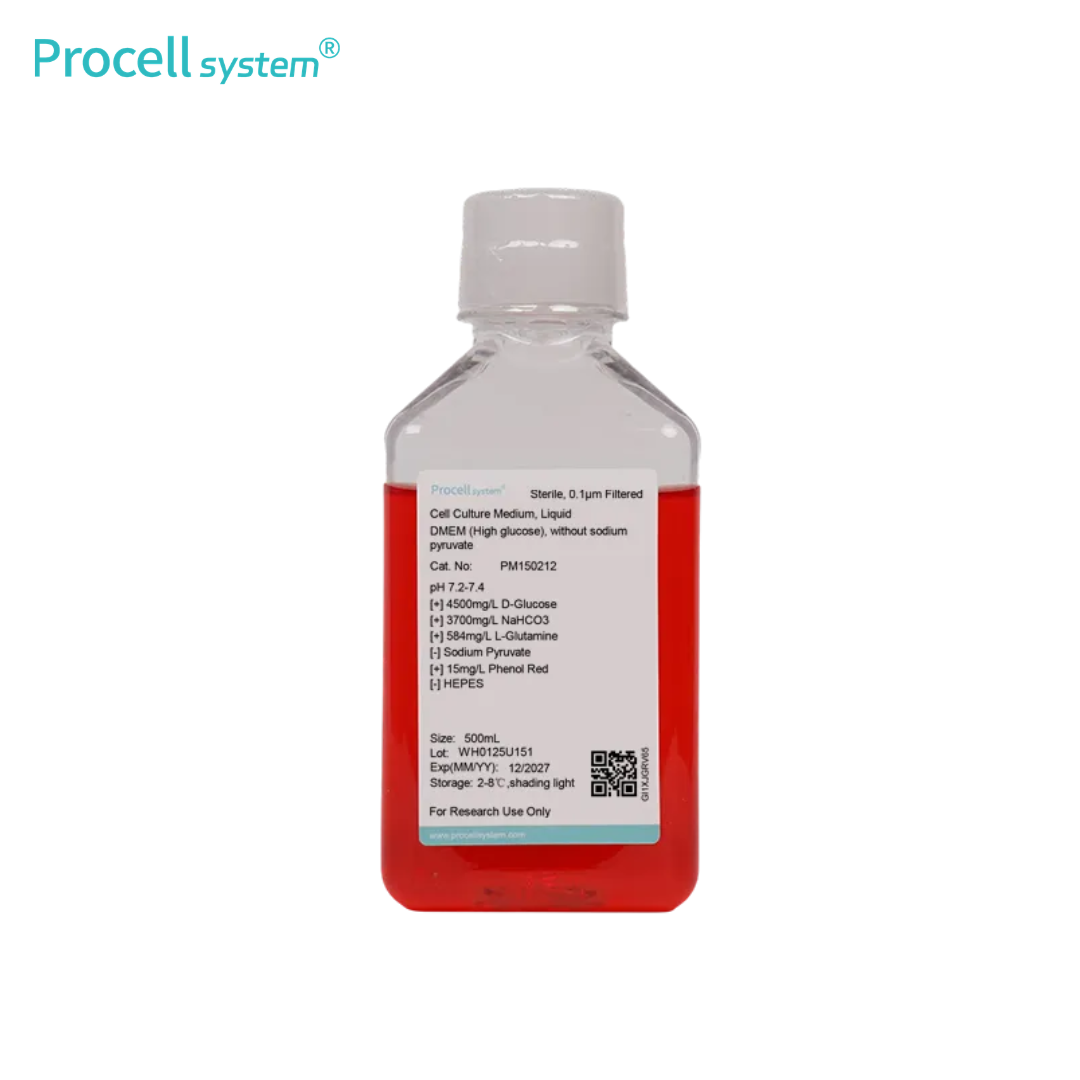
Manufacturer: Procell System
DMEM (Dulbecco's Modified Eagle Medium) was developed on the basis of MEM medium. Compared with MEM medium, the content of amino acid increased by 2 times, the content of vitamin increased by 4 times, and the content of non-essential amino acid, trace iron ion and sodium pyruvate were increased by 4 times. The glucose content of DMEM medium was originally designed as 1000 mg/L (low Glucose type), and then developed into 4500 mg/L (high Glucose type), which has been widely used in cell culture. DMEM (High glucose) was widely used in fast growth, low adhesion cells, hybridoma myeloma cells, clone cells, DNA transfected transformation cells, various primary virus host cells, single cell culture and vaccine production. DMEM (High glucose) contains many kinds of amino acids, vitamins, inorganic salts and other ingredients for cell culture, but does not contain protein, lipids or any growth factors, so the product should be used with serum or serum-free additives.

Manufacturer: Finetest
The Rat PRL (Prolactin) ELISA Kit from FineTest is designed for the quantitative measurement of prolactin levels in rat serum, plasma, and other biological fluids. This assay utilizes the sandwich ELISA principle, employing specific antibodies to detect prolactin with high sensitivity and specificity. The kit includes pre-coated 96-well plates, standards, detection reagents, and all necessary components for the assay. It offers a user-friendly protocol with an assay time of approximately 3 hours. The detection range typically spans from 15.6 pg/mL to 1000 pg/mL, with a sensitivity of less than 9.4 pg/mL. This kit is suitable for research applications involving prolactin-related studies in rats.

Manufacturer: Abbkine Scientific
Cathepsin Z or cathepsin X is a lysosomal cysteine proteinase and member of the peptidase C1 family. It exhibits both carboxy-monopeptidase and carboxy-dipeptidase activities. The encoded protein has also been known as cathepsin X and cathepsin P. This gene is expressed ubiquitously in cancer cell lines and primary tumors and, like other members of this family, may be involved in tumorigenesis.

Manufacturer: Abbkine Scientific
Myoglobin is a single-chain globular protein of 153 amino acids, containing a heme prosthetic group in the center around which the remaining apoprotein folds. It has eight alpha helices and a hydrophobic core. It has a molecular weight of 16,700 daltons, and is the primary oxygen-carrying pigment of muscle tissues. Unlike the blood-borne hemoglobin, to which it is structurally related, this protein does not exhibit cooperative binding of oxygen, since positive cooperativity is a property of multimeric/oligomeric proteins only. Instead, the binding of oxygen by myoglobin is unaffected by the oxygen pressure in the surrounding tissue. Myoglobin is often cited as having an "instant binding tenacity" to oxygen given its hyperbolic oxygen dissociation curve.
Manufacturer: Abbkine Scientific
Testosterone is the primary male sex hormone and an anabolic steroid. In men, testosterone plays a key role in the development of male reproductive tissues such as the testis and prostate, as well as promoting secondary sexual characteristics such as increased muscle and bone mass, and the growth of body hair. In addition, testosterone is involved in health and well-being, and the prevention of osteoporosis. Insufficient levels of testosterone in men may lead to abnormalities including frailty and bone loss.

Manufacturer: Abbkine Scientific
Minami et al. (1987) reported the full-length cDNA and complete primary structure of human LTA4 hydrolase. This was the first report of the molecular cloning of an enzyme involved in the biosynthesis of eicosanoids. Funk et al. (1987) isolated a cDNA clone corresponding to leukotriene A4 hydrolase from a human lung lambda-gt11 expression library by immunoscreening with a polyclonal antiserum.

Manufacturer: Abbkine Scientific
Angiotensin II is a potent pressor hormone and a primary regulator of aldosterone secretion. It is an important effector controlling blood pressure and volume in the cardiovascular system. It acts through at least two types of receptors termed AT1 and AT2. AGTR2 belongs to a family 1 of G protein-coupled receptors. It is an integral membrane protein. It plays a role in the central nervous system and cardiovascular functions that are mediated by the renin-angiotensin system. This receptor mediates programmed cell death (apoptosis). In adults, it is highly expressed in myometrium with lower levels in adrenal gland and fallopian tube. It is highly expressed in fetal kidney and intestine. The human AGTR2 gene is composed of three exons and spans at least 5 kb.