
Jonlnbio Elisa Kit
Jonlnbio Elisa Kit
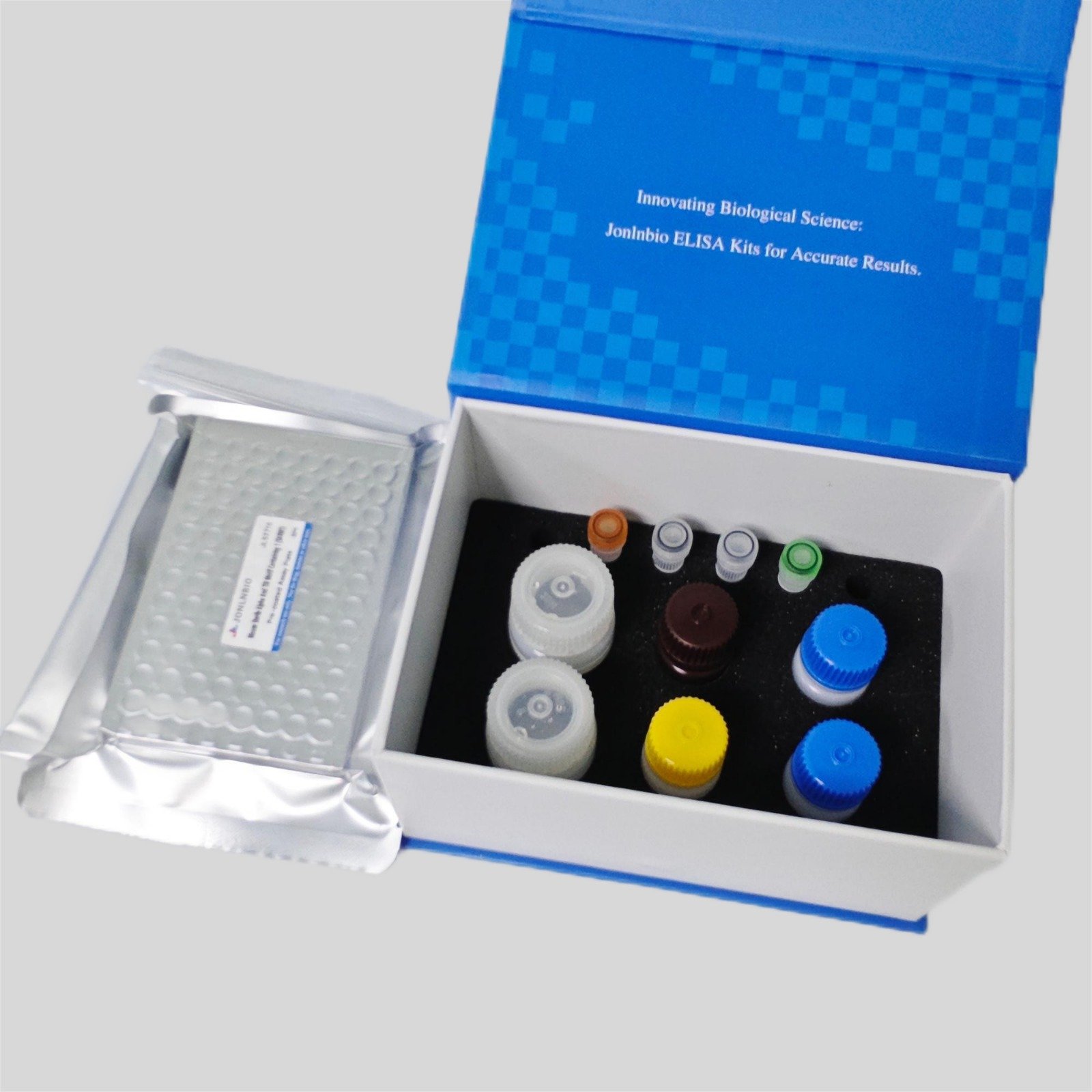
Manufacturer: Jonlnbio
Oxytocin (OT) is a polypeptide hormone and neuropeptide normally produced by the hypothalamus and released by the posterior pituitary gland. It plays a role in social relationships, reproduction, labor and delivery and during the postpartum period. It acts as a hormone that is released into the bloodstream during sexual activity and childbirth. In either form, oxytocin stimulates uterine contractions and speeds up the labor process. The production and secretion of oxytocin is controlled by a positive feedback mechanism in which its initial release stimulates the production and release of further oxytocin. For example, when oxytocin is released during uterine contractions at the beginning of labor, this stimulates the production and release of more oxytocin and increases the intensity and frequency of contractions. This process increases in intensity and frequency and continues until the triggering activity ceases.
Manufacturer: Jonlnbio
Lactoferrin (LF), also known as lactotransferrin (LTF), is a multifunctional protein of the transferrin family. Lactoferrin is a globular glycoprotein with a molecular mass of about 80 kDa that is widely represented in various secretory fluids, such as milk, saliva, tears, and nasal secretions. Lactoferrin is also present in secondary granules of PMNs and is secreted by some acinar cells. Lactoferrin can be purified from milk or produced recombinantly.Lactoferrin is one of the components of the immune system of the body; it has antimicrobial activity (bacteriocide, fungicide) and is part of the innate defense, mainly at mucoses.It is constantly produced and released into saliva, tears, as well as seminal and vaginal fluid.
Manufacturer: Jonlnbio
Keratin 18 is a type I cytokeratin. It is, together with its filament partner keratin 8, perhaps the most commonly found products of the intermediate filament gene family. They are expressed in single layer epithelial tissues of the body. Mutations in this gene have been linked to cryptogenic cirrhosis. Two transcript variants encoding the same protein have been found for this gene.Keratin 18 is often used together with keratin 8 and keratin 19 to differentiate cells of epithelial origin from hematopoietic cells in tests that enumerate circulating tumor cells in blood.
Manufacturer: Jonlnbio
Hypoxia-inducible factor 1-alpha, also known as HIF-1-alpha, is a subunit of a heterodimeric transcription factor hypoxia-inducible factor 1 (HIF-1) that is encoded by the HIF1A gene.The Nobel Prize in Physiology or Medicine 2019 was awarded for the discovery of HIF.HIF1A is a basic helix-loop-helix PAS domain containing protein, and is considered as the master transcriptional regulator of cellular and developmental response to hypoxia.
Manufacturer: Jonlnbio
Chemokine (C-X-C motif) ligand 3 (CXCL3) is a small cytokine belonging to the CXC chemokine family that is also known as GRO3 oncogene (GRO3), GRO protein gamma (GROg) and macrophage inflammatory protein-2-beta (MIP2b). CXCL3 controls migration and adhesion of monocytes and mediates its effects on its target cell by interacting with a cell surface chemokine receptor called CXCR2.
Manufacturer: Jonlnbio
Chemokine (C-X-C motif) ligand 2 (CXCL2) is a small cytokine belonging to the CXC chemokine family that is also called macrophage inflammatory protein 2-alpha (MIP2-alpha), Growth-regulated protein beta (Gro-beta) and Gro oncogene-2 (Gro-2). CXCL2 is 90% identical in amino acid sequence as a related chemokine, CXCL1. This chemokine is secreted by monocytes and macrophages and is chemotactic for polymorphonuclear leukocytes and hematopoietic stem cells.The gene for CXCL2 is located on human chromosome 4 in a cluster of other CXC chemokines.CXCL2 mobilizes cells by interacting with a cell surface chemokine receptor called CXCR2.

Manufacturer: Jonlnbio
The Gal4 transcription factor is a positive regulator of gene expression of galactose-induced genes. This protein represents a large fungal family of transcription factors, Gal4 family, which includes over 50 members in the yeast Saccharomyces cerevisiae e.g. Oaf1, Pip2, Pdr1, Pdr3, Leu3.Gal4 recognizes genes with UASG, an upstream activating sequence, and activates them. In yeast cells, the principal targets are GAL1 (galactokinase), GAL10 (UDP-glucose 4-epimerase), and GAL7 (galactose-1-phosphate uridylyltransferase), three enzymes required for galactose metabolism. This binding has also proven useful in constructing the GAL4/UAS system, a technique for controlling expression in insects.
Manufacturer: Jonlnbio
Cathepsin K, abbreviated CTSK, is an enzyme that is encoded by the CTSK gene.The protein encoded by this gene is a cysteine cathepsin, a lysosomal cysteine protease involved in bone remodeling and resorption. This protein, which is a member of the peptidase C1 protein family, is expressed predominantly in osteoclasts.Cathepsin K is a protease, which is defined by its high specificity for kinins, that is involved in bone resorption. The enzyme's ability to catabolize elastin, collagen, and gelatin allows it to break down bone and cartilage. This catabolic activity is also partially responsible for the loss of lung elasticity and recoil in emphysema. Cathepsin K inhibitors show great potential in the treatment of osteoporosis.

Manufacturer: Jonlnbio
Cathepsin D is a protein that is encoded by the CTSD gene. This gene encodes a lysosomal aspartyl protease composed of a protein dimer of disulfide-linked heavy and light chains, both produced from a single protein precursor. Cathepsin D is an aspartic endo-protease that is ubiquitously distributed in lysosomes. The main function of cathepsin D is to degrade proteins and activate precursors of bioactive proteins in pre-lysosomal compartments.This proteinase, which is a member of the peptidase A1 family, has a specificity similar to but narrower than that of pepsin A. Transcription of the CTSD gene is initiated from several sites, including one that is a start site for an estrogen-regulated transcript.