
Search Result
Found "3416" results return by the query.

Manufacturer: Elabscience
Neurotrophin-3 (NT-3) is a member of the NGF family of neurotrophic factors and is structurally related to β-NGF, BDNF and NT-4. The NT3 cDNA encodes a 257 amino acid residue precursor protein with a signal peptide and a proprotein that are cleaved to yield the 119 amino acid residue mature NT3.The amino acid sequences of mature human, murine and rat NT-3 are identical. NT-3 selectively promotes the differentiation and survival of specific neuronal subpopulations in both the central as well as the peripheral nervous systems.

Manufacturer: Elabscience
CD98 is a single-pass type I I membrane protein which belongs to the SLC3A transporter family. SLC3A2/MDU1 is expressed ubiquitously in all tissues tested with highest levels detected in kidney; placenta and testis and weakest level in thymus. It consists of an 85 kDa glycosylated type II transmembrane heavy chain and a 40-50 kDa non-glycosylated light chain with 12 transmembrane segments. The heavy chain (SLC3A2) pairs with one of several light chains (SLC7A5; 6; 7; 8; 10; or 11) and is required for the cell surface expression and amino acid transport function of the light chains. It is involved in guiding and targeting of LAT1 and LAT2 to the plasma membrane. It also mediates integrin signaling; T cell costimulation; B cell proliferation; and viral fusion with cell membranes.

Manufacturer: Elabscience
TNFα is a homotrimer with a subunit molecular mass of 17 kD cytokine that binds to TNFRSF1A/TNFR1 and TNFRSF1B/TNFBR. It is mainly secreted by macrophages and can induce cell death of certain tumor cell lines. It plays a major role in growth regulation; differentiation; inflammation; viral replication; tumorigenesis; autoimmune diseases and in viral; bacterial; fungal; and parasitic infections. Besides inducing hemorrhagic necrosis of tumors; TNF was found to be involved in tumorigenesis; tumor metastasis; viral replication; septic shock; fever; inflammation; and autoimmune diseases including Crohn’s disease; and rheumatoid arthritis as well as graft-versus-host disease.
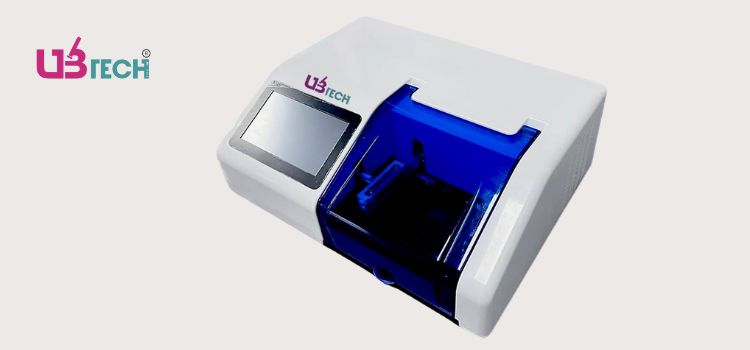
Manufacturer: UBTECH
UBTECH Microplate washers automate the washing steps in ELISA and other immunoassays, ensuring consistent and contamination-free results. These systems are designed to remove unbound reagents and reduce background noise, improving assay accuracy.

Manufacturer: Elabscience
Angiopoietin-1 (Ang-1) is a secreted glycoprotein that plays a critical role in the development and maintenance of the vascular system. The angiopoietin (ANGPT)-TIE2/TEK signaling pathway is essential for blood and lymphatic vascular homeostasis. ANGPT1 is a potent TIE2 activator, whereas ANGPT2 functions as a context-dependent agonist/antagonist. Angiopoietin-1 can protect against pulmonary arterial hypertension, reduce the extent of fibrosis and remodeling in infarcted diabetic myocardium, and enhance tumor progression and metastasis.

Manufacturer: Elabscience
The Recombinant AcmNPV Envelope Glycoprotein gp64(His Tag) (Catalog No. PKSV030118) is a high-purity protein produced using Baculovirus-Insect Cells. It is designed for research applications, particularly in studying the AcMNPV virus.

Manufacturer: Elabscience
CD200 is a transmembrane immunoregulatory protein that belongs to the immunoglobulin superfamily. It contains one Ig like V type domain and one Ig like C2 type domain in its extracelluar domain. CD200 is widely but not ubiquitously expressed. Its receptor (CD200R) is restricted primarily to mast cells; basophils; macrophages; and dendritic cells; which suggests myeloid cell regulation as the major function of CD200. CD200 and CD200R associate via their respective N-terminal Ig-like domains. In myeloid cells; CD200R initiates inhibitory signals following receptor-ligand contact. In T cells; CD200 functions as a co-stimulatory molecule independent of the CD28 pathway. In addition; CD200 also plays an important role in prevention of graft rejection; autoimmune diseases and spontaneous abortion.

Manufacturer: Elabscience
Tumor Necrosis Factor-α (TNF-α) is secreted by macrophages; monocytes; neutrophils; T-cells; and NK-cells following stimulation by bacterial LPS. Cells expressing CD4 secrete TNF-α while cells that express CD8 secrete little or no TNF-α. Synthesis of TNF-α can be induced by many different stimuli including interferons; IL2; and GM-CSF. The clinical use of the potent anti-tumor activity of TNF-α has been limited by the proinflammatory side effects such as fever; dose-limiting hypotension; hepatotoxicity; intravascular thrombosis; and hemorrhage. Designing clinically applicable TNF-α mutants with low systemic toxicity has been of intense pharmacological interest. Human TNF-α that binds to murine TNF-R55 but not murine TNF-R7; exhibits retained anti-tumor activity and reduced systemic toxicity in mice compared with murine TNF-α; which binds to both murine TNF receptors. Based on these results; many TNF-α mutants that selectively bind to TNF-R55 have been designed. These mutants displayed cytotoxic activities on tumor cell lines in vitro and have exhibited lower systemic toxicity in vivo. Recombinant Human TNF-α High Active Mutant differs from the wild-type by amino acid subsitution of amino acids 1-7 with Arg8; Lys9; Arg10 and Phe157. This mutant form has been shown to have increased activity with less inflammatory side effects in vivo.

Manufacturer: Elabscience
Serum amyloid A-2 protein (SAA2) belongs to the SAA family. It expressed by the liver and secreted in plasma. SAA2 functions as major acute phase reactant and could works as apolipoprotein of the HDL complex. Increased levels of A-SAA in serum are indicative of inflammatory disease. When highly expressed, SAA can displace ApoA1 as the major apolipoprotein in HDL complexes, weakening the function of HDL as a reverse (lipid clearing) cholesterol transporter. A highly charged region of SAA2 and SAA1 (aa 36-68) contains putative fibronectin- and laminin-binding motifs. This region also binds heparin sulfate proteoglycans at mildly acidic pH and promotes aggregation of A-SAA.