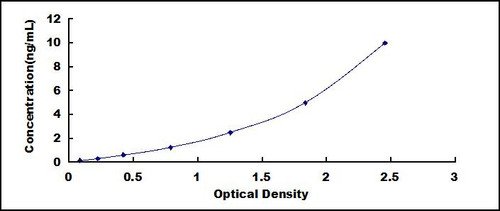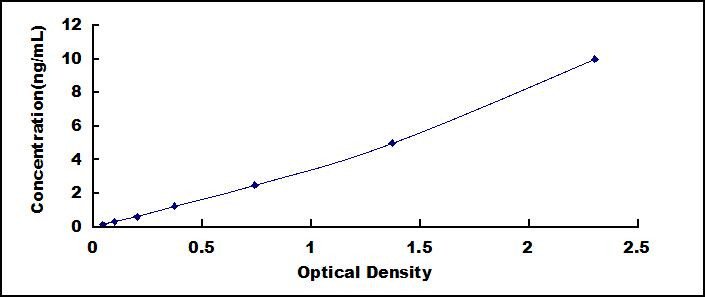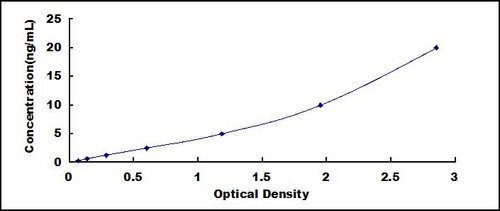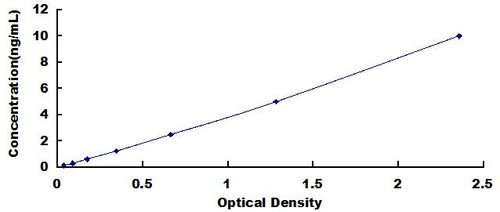
Manufacturer: Jonlnbio
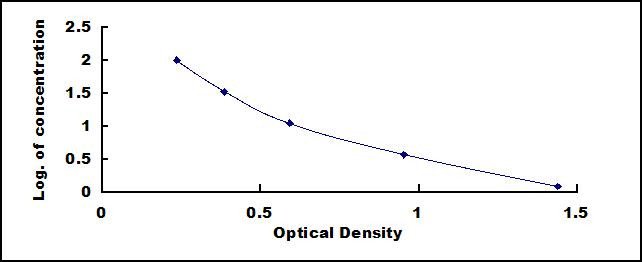
Vascular endothelial growth factor A (VEGF-A) is a protein that is encoded by the VEGFA gene.This gene is a member of the platelet-derived growth factor (PDGF)/vascular endothelial growth factor (VEGF) family and encodes a protein that is often found as a disulfide linked homodimer. This protein is a glycosylated mitogen that specifically acts on endothelial cells and has various effects, including mediating increased vascular permeability, inducing angiogenesis, vasculogenesis, and endothelial cell growth, promoting cell migration, and inhibiting apoptosis. Alternatively spliced transcript variants, encoding either freely secreted or cell-associated isoforms, have been characterized.
Manufacturer: Jonlnbio
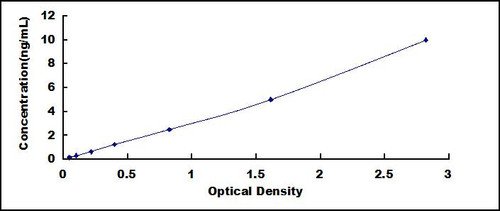
Vascular endothelial growth factor B also known as VEGF-B is a protein that is encoded by the VEGF-B gene. VEGF-B is a growth factor that belongs to the vascular endothelial growth factor family, of which VEGF-A is the best-known member.In contrast to VEGF-A, VEGF-B plays a less pronounced role in the vascular system: Whereas VEGF-A is important for the formation of blood vessels, such as during development or in pathological conditions, VEGF-B seems to play a role only in the maintenance of newly formed blood vessels during pathological conditions.[6] VEGF-B plays also an important role on several types of neurons.
Manufacturer: Jonlnbio
C-fos-induced growth factor (FIGF) (or vascular endothelial growth factor D, VEGF-D) is a vascular endothelial growth factor that is encoded by the FIGF gene.The protein encoded by this gene is a member of the platelet-derived growth factor/vascular endothelial growth factor (PDGF/VEGF) family and is active in angiogenesis, lymphangiogenesis, and endothelial cell growth. This secreted protein undergoes a complex proteolytic maturation, generating multiple processed forms that bind and activate VEGFR-2 and VEGFR-3 receptors. The structure and function of this protein is similar to those of vascular endothelial growth factor C.
Manufacturer: Jonlnbio
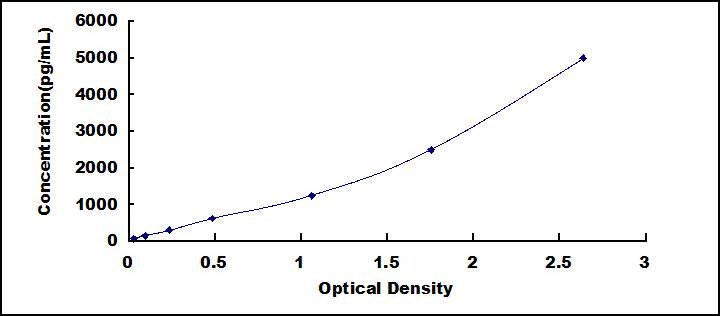
Alpha-fetoprotein (AFP, α-fetoprotein; also sometimes called alpha-1-fetoprotein, alpha-fetoglobulin, or alpha fetal protein) is a protein that is encoded by the AFP gene. The AFP gene is located on the q arm of chromosome 4 (4q13.3). Maternal AFP serum level is used to screen for Down syndrome, neural tube defects, and other chromosomal abnormalities.AFP is a major plasma protein produced by the yolk sac and the fetal liver during fetal development. It is thought to be the fetal analog of serum albumin. AFP binds to copper, nickel, fatty acids and bilirubinand is found in monomeric, dimeric and trimeric forms.
Manufacturer: Jonlnbio
Angiopoietin-related protein 2 also known as angiopoietin-like protein 2 is a protein that is encoded by the ANGPTL2 gene.Angiopoietin-like protein 2 maintains tissue homeostasis by promoting adaptive inflammation and subsequent tissue reconstruction, whereas an excess of ANGPTL2 activation induced by prolonged stress promotes the breakdown of tissue homeostasis due to chronic inflammation, promoting the development of metabolic diseases. ANGPTL2 has a role also in angiogenesis, in tissue repair, in obesity, in atherosclerotic diseases and finally in carcinogenesis.
Manufacturer: Jonlnbio
Cathepsin B belongs to a family of lysosomal cysteine proteases known as the cysteine cathepsins and plays an important role in intracellular proteolysis. Cathepsin B is encoded by the CTSB gene. Cathepsin B is upregulated in certain cancers, in pre-malignant lesions, and in various other pathological conditions.Cathepsin B may enhance the activity of other proteases, including matrix metalloproteinase, urokinase (serine protease urokinase plasminogen activator), and cathepsin D, and thus it has an essential position for the proteolysis of extracellular matrix components, intercellular communication disruption, and reduced protease inhibitor expression.
Manufacturer: Jonlnbio
Cathepsin D is a protein that is encoded by the CTSD gene. This gene encodes a lysosomal aspartyl protease composed of a protein dimer of disulfide-linked heavy and light chains, both produced from a single protein precursor. Cathepsin D is an aspartic endo-protease that is ubiquitously distributed in lysosomes. The main function of cathepsin D is to degrade proteins and activate precursors of bioactive proteins in pre-lysosomal compartments.This proteinase, which is a member of the peptidase A1 family, has a specificity similar to but narrower than that of pepsin A. Transcription of the CTSD gene is initiated from several sites, including one that is a start site for an estrogen-regulated transcript.
Manufacturer: Jonlnbio
Cathepsin K, abbreviated CTSK, is an enzyme that is encoded by the CTSK gene.The protein encoded by this gene is a cysteine cathepsin, a lysosomal cysteine protease involved in bone remodeling and resorption. This protein, which is a member of the peptidase C1 protein family, is expressed predominantly in osteoclasts.Cathepsin K is a protease, which is defined by its high specificity for kinins, that is involved in bone resorption. The enzyme's ability to catabolize elastin, collagen, and gelatin allows it to break down bone and cartilage. This catabolic activity is also partially responsible for the loss of lung elasticity and recoil in emphysema. Cathepsin K inhibitors show great potential in the treatment of osteoporosis.
Manufacturer: Jonlnbio
The Gal4 transcription factor is a positive regulator of gene expression of galactose-induced genes. This protein represents a large fungal family of transcription factors, Gal4 family, which includes over 50 members in the yeast Saccharomyces cerevisiae e.g. Oaf1, Pip2, Pdr1, Pdr3, Leu3.Gal4 recognizes genes with UASG, an upstream activating sequence, and activates them. In yeast cells, the principal targets are GAL1 (galactokinase), GAL10 (UDP-glucose 4-epimerase), and GAL7 (galactose-1-phosphate uridylyltransferase), three enzymes required for galactose metabolism. This binding has also proven useful in constructing the GAL4/UAS system, a technique for controlling expression in insects.