
Search Result
Found "3416" results return by the query.

Manufacturer: Elabscience
HSPA1A is a member of the Hsp70 protein family. The 70 kilodalton heat shock proteins (Hsp70s) are a family of ubiquitously expressed heat shock proteins. HSP are abundant and conserved proteins present in all cells. Upon temperature shock or other stress stimuli, HSP are synthesized intracellularly, which may protect cells from protein denaturation or from death. Extracellularly, HSP can serve a cytokine function to initiate both innate and adaptive immunity through activation of APC. HSP serves also a chaperone function and facilitates presentation of antigen peptide to T cells. Molecular chaperones of the Hsp70 family have diverse functions in cells. They assist the folding of newly synthesized and stress-denatured proteins, as well as the import of proteins into organelles, and the dissociation of aggregated proteins. The well-conserved Hsp70 chaperones are ATP dependent: binding and hydrolysis of ATP regulates their interactions with unfolded polypeptide substrates, and ATPase cycling is necessary for their function. All cellular functions of Hsp70 chaperones use the same mechanism of ATP-driven polypeptide binding and release.

Manufacturer: Elabscience
Programmed death-1 ligand-1 (PD-L1; CD274; B7-H1) has been identified as the ligand for the immunoinhibitory receptor programmed death-1(PD1/PDCD1) and has been demonstrated to play a role in the regulation of immune responses and peripheral tolerance. PD-L1/B7-H1 is a member of the growing B7 family of immune molecules and this protein contains one V-like and one C-like Ig domain within the extracellular domain; and together with PD-L2; are two ligands for PD1 which belongs to the CD28/CTLA4 family expressed on activated lymphoid cells. By binding to PD1 on activated T-cells and B-cells; PD-L1 may inhibit ongoing T-cell responses by inducing apoptosis and arresting cell-cycle progression. Accordingly; it leads to growth of immunogenic tumor growth by increasing apoptosis of antigen specific T cells and may contribute to immune evasion by cancers. PD-L1 thus is regarded as promising therapeutic target for human autoimmune disease and malignant cancers.

Manufacturer: Elabscience
X-ray repair cross-complementing protein 5, also known as 86 kDa subunit of Ku antigen, ATP-dependent DNA helicase 2 subunit 2, ATP-dependent DNA helicase II 80 kDa subunit, CTC box-binding factor 85 kDa subunit, DNA repair protein XRCC5, Lupus Ku autoantigen protein p86, TLAA and XRCC5, is a nucleus and chromosome which belongs to theku80 family. XRCC5 is a single stranded DNA-dependent ATP-dependent helicase. XRCC5 has a role in chromosome translocation. X-ray repair cross-complementing protein 6, also known as 5'-deoxyribose-5-phosphate lyase Ku70, ATP-dependent DNA helicase 2 subunit 1, ATP-dependent DNA helicase II 70 kDa subunit, 70 kDa subunit of Ku antigen, ATP-dependent DNA helicase 2 subunit 1, CTC box-binding factor 75 kDa subunit, Lupus Ku autoantigen protein p70, Thyroid-lupus autoantigen and XRCC6, is a nucleus and chromosome which belongs to theku70 family. Heterodimer of a XRCC6 and a XRCC5 subunit associates in a DNA-dependent manner with PRKDC to form the DNA-dependent protein kinase complex DNA-PK, and with the LIG4-XRCC4 complex. The dimer also associates with NAA15, and this complex binds to the osteocalcin promoter and activates osteocalcin expression.

Manufacturer: Elabscience
Biotinidase, also known as biotinase and BTD, is a ubiquitous mammalian cell enzyme which expressed at high levels in the liver, serum, and kidney. Its primary function is to cleave biotin from biocytin, preserving the pool of biotin for use as a cofactor for biotin dependent enzymes, namely the 4 human carboxylases. Biotinidase also recycles biotin from enzymes in the body that use it as a helper component in order to function. These enzymes, known ascarboxylases, are important in the processing offats,carbohydrates, andproteins. Biotin is attached to these carboxylase enzymes through anamino acid(the building material of proteins) calledlysine, forming a complex calledbiocytin.

Manufacturer: Elabscience
Alpha-amylase is the major form of amylase found in humans and other mammals. Amylases are secreted proteins that hydrolyze 1,4-alpha-glucoside bonds in oligosaccharides and polysaccharides, and thus catalyze the first step in digestion of dietary starch and glycogen. Alpha-amylase hydrolyses alpha bonds of large, alpha-linked polysaccharides, such as starch and glycogen, yielding glucose and maltose. Amylases is widely expressed and is most prominent in pancreatic juice and saliva, each of which has its own isoform of human α-amylase. They behave differently on isoelectric focusing, and can also be separated in testing by using specific monoclonal antibodies.

Manufacturer: Elabscience
PPIase is a member of the immunophilin protein family. It also belongs to the cyclophilin-type PPIase family; PPIL3 subfamily. PPIase contains 1 PPIase cyclophilin-type domain. Members of the immunophilin protein family play a role in immunoregulation and basic cellular processes involving protein folding and trafficking. PPIases accelerate the folding of proteins. It catalyzes the cis-trans isomerization of proline imidic peptide bonds in oligopeptides. It has a very high substrate specificity for the four-residue peptide Ala-Ala-Pro-Phe only when the proline peptide bond is in the trans state. It interacts with several intracellular signal transduction proteins including type I TGF-beta receptor. It also interacts with multiple intracellular calcium release channels; and coordinates multi-protein complex formation of the tetrameric skeletal muscle ryanodine receptor. In mouse; deletion of this homologous gene causes congenital heart disorder known as noncompaction of left ventricular myocardium.

Manufacturer: Elabscience
The Lactate Dehydrogenase (LDH) Cytotoxicity Colorimetric Assay Kit (Catalog No. E-BC-K771-M) from Elabscience is designed to assess cell membrane integrity by measuring the release of LDH, an enzyme present in the cytoplasm. Elevated LDH levels in the culture medium indicate cell damage or death, making this assay valuable for evaluating cytotoxicity in various research applications.

Manufacturer: Elabscience
The Glutathione Peroxidase 4 (GPX4) Activity Assay Kit (Catalog No. E-BC-K883-M) from Elabscience is designed to measure the activity of GPX4, an enzyme crucial for cellular defense against oxidative stress. GPX4 catalyzes the reduction of lipid hydroperoxides to their corresponding alcohols, thereby protecting cells from lipid peroxidation.
Manufacturer: Elabscience
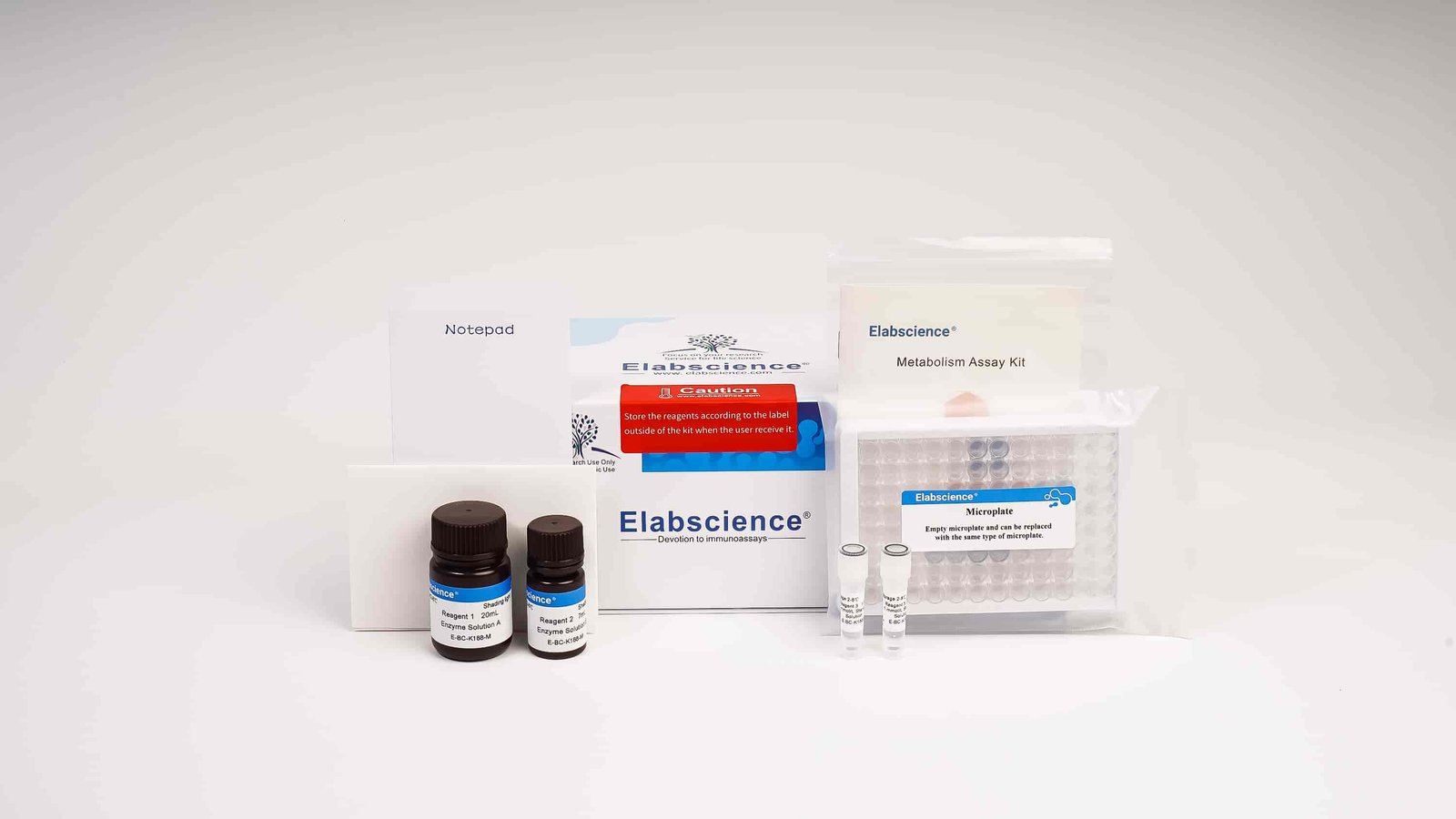
The Pyruvate Dehydrogenase (PDH) Activity Assay Kit (Catalog No. E-BC-K650-M) from Elabscience is designed to measure PDH activity in various biological samples, including serum, plasma, urine, animal tissues, and cell cultures. PDH plays a pivotal role in cellular energy metabolism by converting pyruvate into acetyl-CoA, linking glycolysis to the tricarboxylic acid (TCA) cycle.