
Introduction
The field of molecular biology continues to witness groundbreaking innovations, and gene editing remains one of the most exciting areas of scientific advancement. Since the introduction of CRISPR technology, researchers have been able to modify genetic material with unprecedented precision, opening new possibilities in disease treatment, drug discovery, agriculture, and synthetic biology.
In 2026, scientists have reported a significant breakthrough with the development of compact CRISPR systems that are smaller, more efficient, and easier to deliver into living cells. This advancement has the potential to overcome one of the major limitations of traditional gene-editing tools and could accelerate the development of next-generation gene therapies.
Understanding the Challenge with Traditional CRISPR Systems
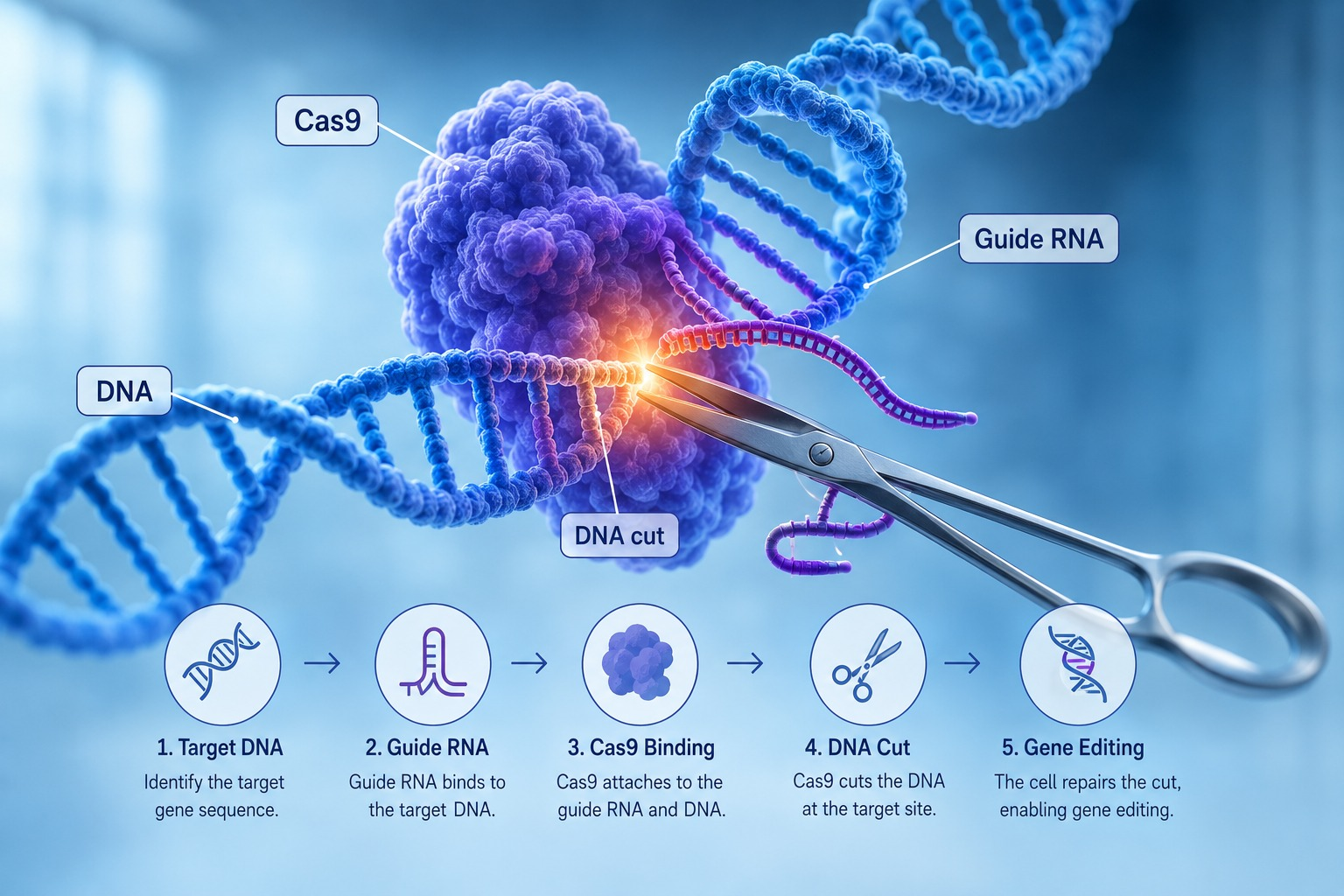
Traditional CRISPR-Cas9 systems have transformed biological research, but they come with certain limitations. One of the biggest challenges is the relatively large size of the Cas9 protein, which makes it difficult to package into commonly used viral delivery systems such as Adeno-Associated Virus (AAV) vectors.
Because of these delivery constraints, many gene-editing procedures require cells to be removed from the body, edited in specialized laboratories, and then reintroduced into patients. While effective, this process can be time-consuming, expensive, and technically demanding.
Researchers worldwide have therefore been searching for smaller and more efficient CRISPR systems that can simplify gene delivery without compromising editing performance.
A Breakthrough: The Rise of Compact CRISPR Systems
Recent studies have identified a new generation of compact CRISPR enzymes, including Cas12f-based systems that are significantly smaller than conventional Cas9 proteins.
Their reduced size allows them to fit comfortably inside AAV delivery vectors, making it easier to transport gene-editing machinery directly into target tissues. Early research has demonstrated impressive editing efficiencies, bringing scientists closer to the goal of safe and effective in vivo gene editing.
This breakthrough could have far-reaching implications for the treatment of genetic disorders, rare diseases, and certain forms of cancer.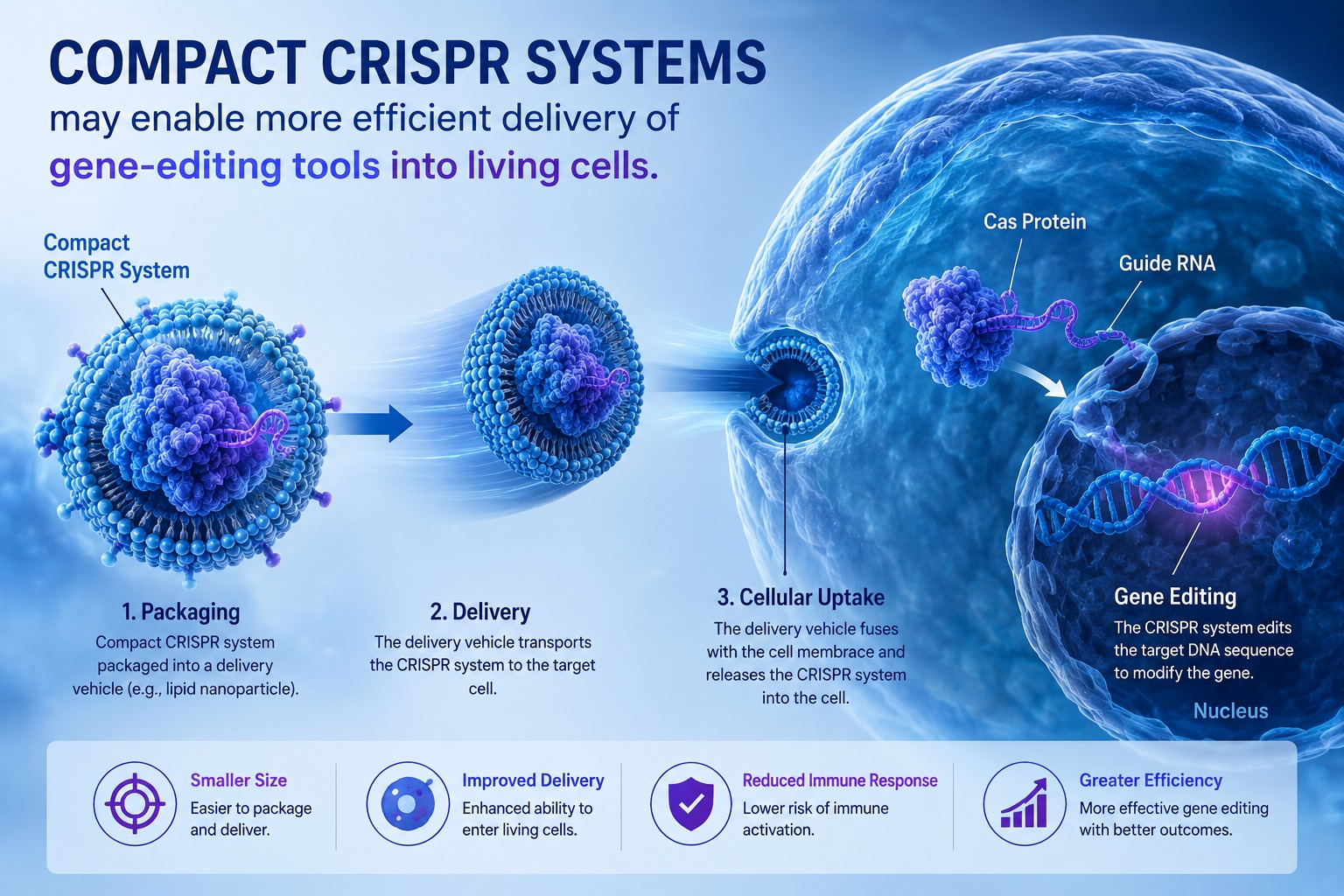
Why This Matters for Molecular Biology Laboratories
While the headlines often focus on clinical applications, advances in CRISPR technology also have a profound impact on molecular biology laboratories.
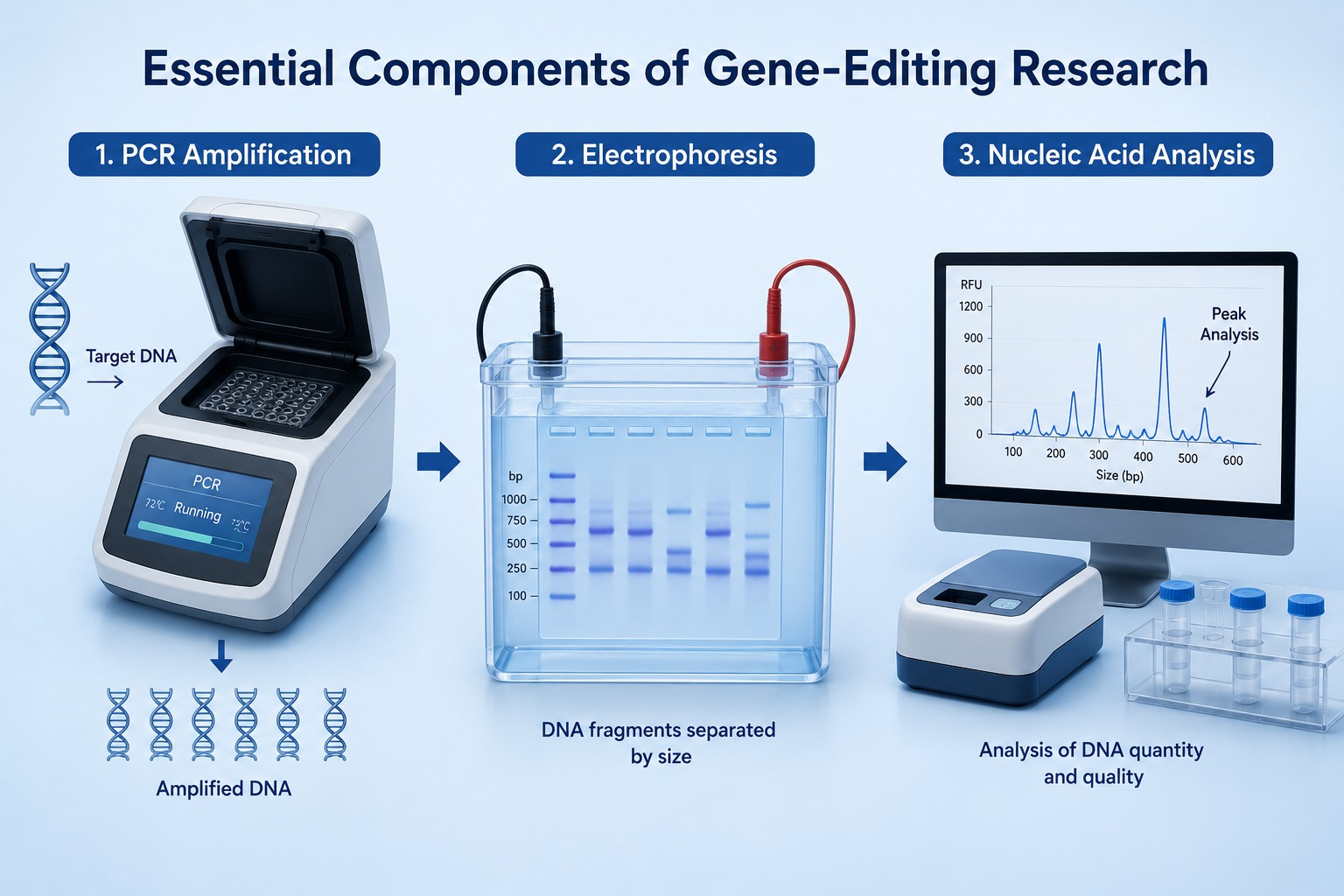
Every gene-editing experiment requires extensive validation and analysis before meaningful conclusions can be drawn. Researchers depend on reliable laboratory workflows to confirm editing efficiency, detect mutations, and characterize biological outcomes.
Key workflows include:
• DNA and RNA extraction
• PCR amplification
• Gel electrophoresis
• DNA fragment analysis
• Sequencing preparation
• Protein expression studies
• Gene expression analysis
As gene-editing technologies become more sophisticated, the demand for high-quality molecular biology reagents and consumables continues to grow.
At Universal Biotechnology, we understand the importance of reliable laboratory tools in supporting cutting-edge research. Our comprehensive portfolio of Molecular Biology Products helps researchers perform critical workflows with confidence, accuracy, and reproducibility.
Beyond CRISPR-Cas9: Emerging Trends in Genome Engineering
The future of gene editing extends far beyond traditional CRISPR-Cas9 systems. Scientists are actively developing next-generation technologies that offer even greater precision and flexibility.
Some of the most promising developments include:
1. Base Editing
Base editing allows researchers to change individual DNA letters without creating double-strand breaks, reducing the risk of unintended genetic alterations.
2. Prime Editing
Often described as a "search-and-replace" system for DNA, prime editing enables precise genetic modifications with improved accuracy.
3. RNA Editing
Unlike DNA editing, RNA editing modifies genetic instructions temporarily, offering new possibilities for safer therapeutic interventions.
4. AI-Assisted Gene Design
Artificial intelligence is increasingly being used to optimize guide RNA design, predict off-target effects, and improve experimental success rates.
The Growing Need for High-Quality Molecular Biology Products
As research methodologies become more advanced, the quality of laboratory reagents directly influences experimental outcomes.
Researchers need dependable products that can support:
• High-fidelity PCR applications
• DNA and RNA purification
• Electrophoresis and fragment analysis
• Protein characterization
• Molecular diagnostics
• Genomics and transcriptomics research
Reliable products not only improve reproducibility but also help laboratories save valuable time and resources.
With the rapid growth of gene-editing research, laboratories are increasingly looking for trusted partners who can provide both high-quality products and technical expertise.
Through collaborations with leading global biotechnology manufacturers, Universal Biotechnology supports researchers across academic institutions, research organizations, healthcare laboratories, and biotechnology industries.
How Universal Biotechnology Supports Researchers in the Era of Advanced Gene Editing
Scientific innovation requires more than breakthrough ideas - it requires dependable laboratory support.
At Universal Biotechnology, our mission is to empower researchers through high-quality research products, technical guidance, and comprehensive laboratory solutions under our philosophy of "One Stop, Infinite Choices."
Our Molecular Biology Product portfolio supports a wide range of applications, including:
• Gene editing and CRISPR research
• Molecular diagnostics
• Genomics and transcriptomics
• Drug discovery and development
• Cell and gene therapy research
• Academic and industrial biotechnology projects
Our team works closely with scientists to help identify the most suitable reagents, consumables, and research solutions for their applications.
By combining technical expertise with access to globally recognized biotechnology brands, Universal Biotechnology helps researchers overcome experimental challenges and accelerate scientific discovery.
Conclusion
The emergence of compact CRISPR systems marks an important milestone in the evolution of genome engineering. By addressing key delivery challenges and improving editing efficiency, these next-generation tools are opening new possibilities in both research and medicine.
At the same time, advancements in base editing, prime editing, RNA editing, and AI-assisted genetic engineering continue to expand the boundaries of what is possible in molecular biology.
As the biotechnology landscape evolves, researchers will increasingly rely on dependable laboratory products and trusted scientific partners to transform innovative ideas into meaningful discoveries.
Universal Biotechnology supports researchers with high-quality Molecular Biology Products, technical expertise, and reliable laboratory solutions.
As gene-editing technologies continue to advance, we remain committed to helping scientists accelerate discoveries and achieve impactful research outcomes.
Explore our Molecular Biology Product portfolio and discover how Universal Biotechnology can support your next scientific breakthrough.
Link to: https://www.unibiotech.in/category/molecular-biology-products.html