
1. Introduction
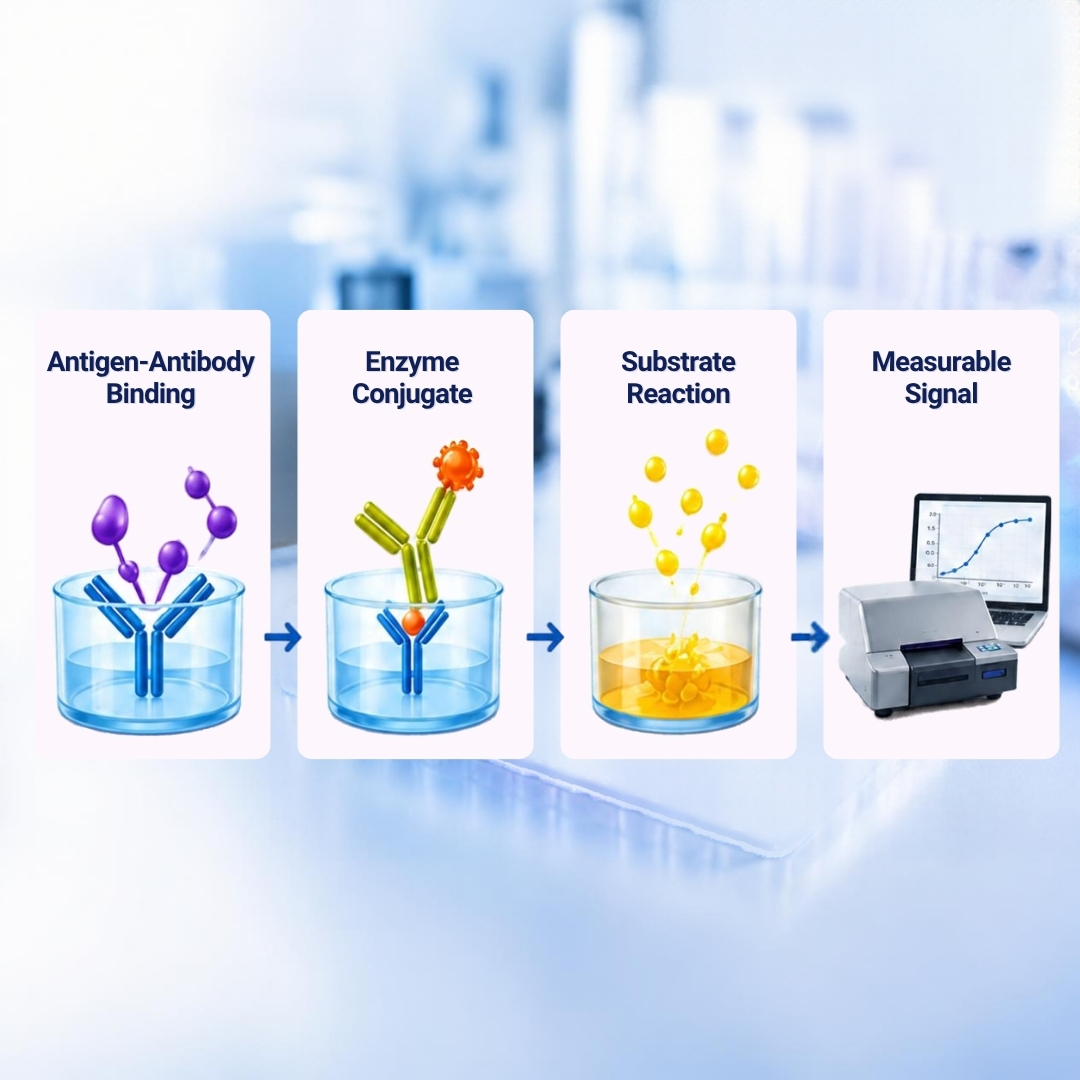
Enzyme-Linked Immunosorbent Assay (ELISA) remains one of the most widely adopted immune-analytical platforms for the detection and quantitative measurement of proteins, peptides, cytokines, hormones, antibodies and other biological analytes. Its analytical principle is based on highly specific antigen-antibody recognition. Enzyme-mediated signal amplification then converts these molecular binding events into measurable optical signals. This combination of specificity, sensitivity, relative simplicity and quantitative capability has established ELISA as a core technology in biomarker and protein research [1,2].
In contemporary biomedical research, ELISA is increasingly used not simply as a detection method but as a quantitative analytical workflow. This is particularly important for low-abundance biomarkers, where assay performance depends on more than nominal sensitivity. Parameters such as limit of detection (LOD), specificity, dynamic range, recovery, dilutional linearity, matrix effects, calibration performance and reproducibility can substantially influence the reliability of quantitative measurements [3,4].
The selection of an ELISA should therefore align with the biological question, analyte concentration, sample matrix, and analytical characteristics of the assay. A kit should not be selected solely on the basis of its sensitivity or target name.
2. Why ELISA remains relevant in biomarker research
2.1 Quantitative biomarker analysis
ELISA enables researchers to quantify specific biological molecules in complex samples and compare analyte concentrations across experimental conditions. This makes it particularly valuable for studying inflammatory mediators, cytokines, growth factors, signalling proteins, hormones and disease-associated biomarkers [1,2].
For cytokine research, for example, ELISA has historically provided a robust approach for measuring individual cytokines with high analytical specificity. Its established workflow and broad availability of validated commercial assays have made it a routine platform in immunology and inflammation research [1].
2.2 Protein and immunological research
Depending on assay configuration, ELISA can be applied to proteins, antibodies, antigens, cytokines, enzymes and other analytes. Sandwich ELISA is particularly useful for protein quantification because the analyte is captured between two recognition reagents, providing an additional level of molecular specificity.
The analytical performance of such assays is strongly influenced by the affinity and specificity of the antibodies, epitope accessibility, assay architecture and sample matrix.
2.3 Cell-culture and secretome analysis
ELISA is frequently integrated with cell-culture experiments to quantify molecules released into culture supernatants. This enables researchers to connect cellular phenotypes with quantitative changes in secreted cytokines, chemokines, growth factors and other proteins.
However, sample handling, storage and matrix composition can influence measured cytokine concentrations. Standardized sample collection and processing are therefore essential for generating reproducible quantitative data [5].
3. What defines a high-sensitivity ELISA?
The term “high sensitivity” should not be interpreted as a single numerical specification. A scientifically appropriate ELISA should demonstrate a combination of analytical characteristics that are relevant to the intended application.

3.1 Analytical sensitivity and Limit of Detection
Analytical sensitivity describes the capability of an assay to detect low concentrations of the target analyte. The limit of detection (LOD) represents the lowest concentration that can be reliably distinguished from background under defined assay conditions.
A low LOD can be particularly important for low-abundance biomarkers; however, an assay with an exceptionally low LOD is not necessarily optimal if its specificity, matrix compatibility or quantitative range is inadequate for the experimental sample.
Therefore, LOD should always be interpreted in the context of the expected biological concentration and complete assay performance.
3.2 Quantitative or dynamic range
The quantitative range defines the concentration interval over which analyte concentrations can be reliably estimated. Ideally, the expected concentration of experimental samples should fall within the assay's validated quantitative range.
If samples fall outside this range, appropriate dilution or concentration strategies may be required. Importantly, dilution should maintain acceptable dilutional linearity and recovery.
3.3 Specificity and cross-reactivity
Specificity is fundamental to immunoassay performance. Antibody cross-reactivity with structurally related proteins or endogenous molecules can produce inaccurate measurements. This becomes particularly important in biological matrices containing high concentrations of unrelated proteins, endogenous antibodies, binding proteins or other potential interferents. Immunoassay interference, including heterophilic antibody effects, has been documented as an important source of erroneous cytokine measurements [6].
3.4 Matrix effects
Serum, plasma, cell-culture media, tissue homogenates and other biological matrices can influence antigen–antibody interactions and signal generation. Consequently, an assay optimized in buffer may not necessarily exhibit identical analytical performance in a complex biological matrix. Matrix effects are especially relevant to cytokine and biomarker analysis, where biological fluids contain numerous proteins and potential interfering components [5,7].
3.5 Calibration and standard-curve performance
Quantitative ELISA depends on conversion of optical signal into analyte concentration through an appropriate calibration model. Standard-curve selection and mathematical fitting therefore form an important part of quantitative assay interpretation. The calibration range should encompass the expected sample concentrations, while appropriate dilution and quality-control strategies should be used to minimize extrapolation beyond the validated range.
For more regulated bioanalytical applications, regulatory guidance emphasizes characterization of parameters including accuracy, precision, selectivity, calibration performance and other assay-specific characteristics [3,8].
4. How to select the correct ELISA kit
Selecting an ELISA should begin with the experimental objective and biological sample, followed by evaluation of the assay's analytical specifications.

4.1 Define the target analyte
Confirm the exact protein, cytokine, hormone, antigen, antibody or other analyte of interest. Closely related proteins may exhibit different epitopes and biological functions, making target identity and antibody specificity critical considerations.
4.2 Confirm species compatibility
The antibody pair and assay should be appropriate for the species under investigation. Researchers should verify the manufacturer's stated species reactivity rather than assuming cross-species compatibility.
4.3 Evaluate sample type
The assay should be evaluated for the intended sample matrix, including:
• Serum
• Plasma
• Cell-culture supernatant
• Tissue homogenate
• Cerebrospinal fluid
• Other biological fluids or extracts
Matrix compatibility can directly influence recovery, background signal and quantitative accuracy [5].
4.4 Select the appropriate assay format
Common ELISA formats include:
Sandwich ELISA is widely used for quantitative protein and cytokine measurement because the target is recognized by two antibodies, potentially improving analytical specificity [1,4].
4.5 Match sensitivity to expected concentration
The expected concentration of the analyte should be compared with the stated LOD and quantitative range of the assay. An assay that is highly sensitive but has an unsuitable quantitative range may still be poorly matched to the experimental application.
4.6 Assess recovery and dilutional linearity
For samples requiring dilution, researchers should confirm that measured concentrations remain proportional after dilution and that acceptable recovery is maintained. These parameters provide important evidence that the assay can accurately quantify the analyte in the intended sample matrix.
5. ELISA, multiplex immunoassays and high-throughput biomarker analysis
The increasing number of biomarkers investigated in modern research has driven interest in multiplex immunoassays, which can measure multiple analytes from a limited sample volume. Multiplex approaches can increase analytical throughput and reduce sample consumption. However, they introduce additional complexity related to antibody interactions, cross-reactivity, matrix effects, assay standardization, and data interpretation. [9,10].
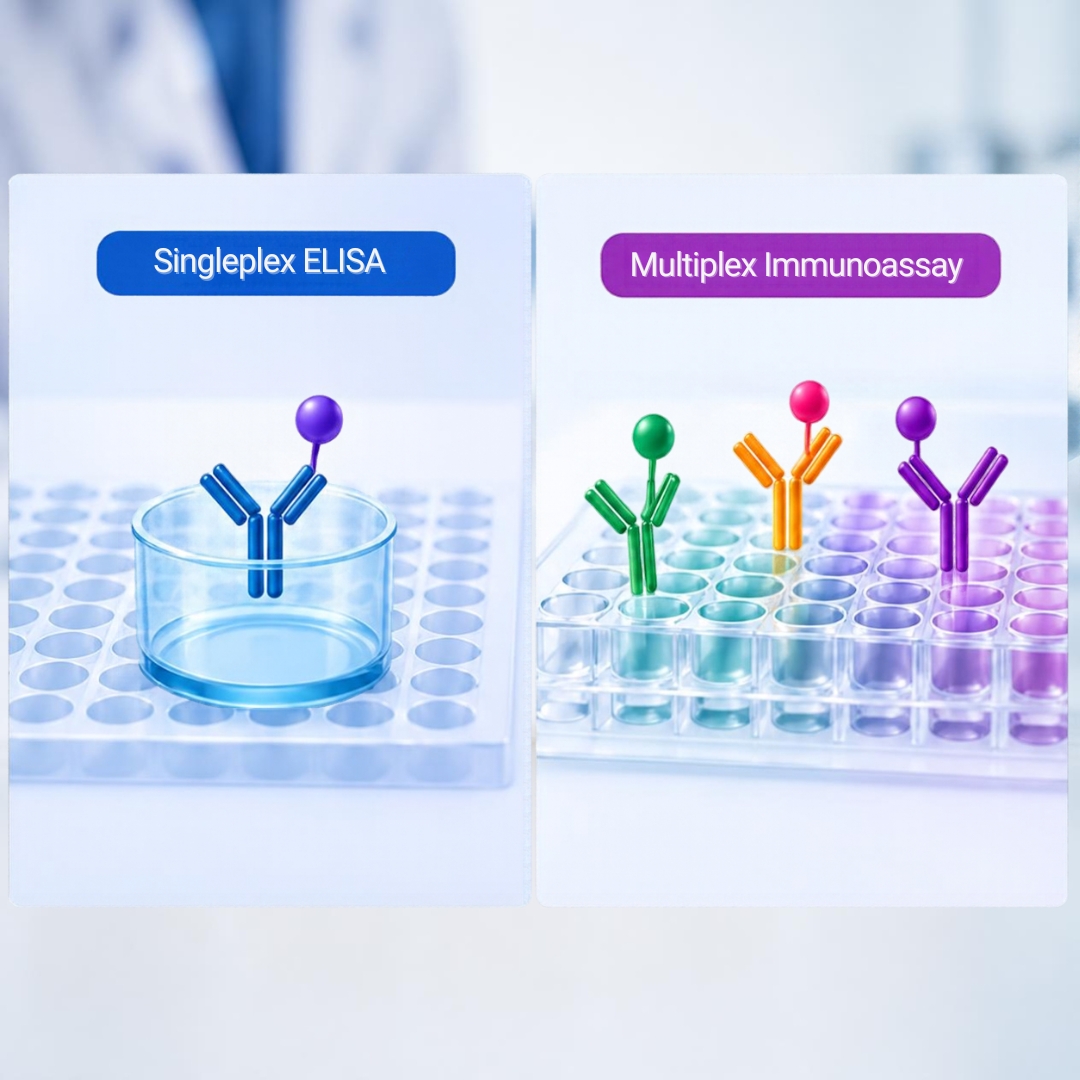
Importantly, multiplex assays should not automatically be considered superior to conventional ELISA. Comparative studies have demonstrated that agreement between multiplex immunoassays and conventional ELISA can vary substantially depending on the analyte and assay configuration [11].
Consequently, the choice between single-plex ELISA and multiplex immunoassay should be driven by the experimental question, sample availability, required throughput, analyte panel and validation requirements.
6. ELISA in virology, infectious disease and immunology research
ELISA has a particularly important role in infectious disease and immunology research, where quantitative measurement of host-response proteins, pathogen-associated antigens and antibodies can provide mechanistic information.

Applications can include investigation of:
• Cytokines and inflammatory mediators
• Host immune responses
• Pathogen-specific antibodies
• Viral and bacterial antigens
• Infection-associated biomarkers
• Cell-mediated immune responses
• Protein expression and secretion
In infectious disease research, the analytical specificity of the antibody pair is particularly important because closely related pathogen proteins or host proteins may generate unintended signals. Appropriate controls, matrix-matched validation and documented assay performance are therefore essential.
7. ELISA Validation: From sensitivity to analytical reliability
A reliable immunoassay requires more than a strong signal. The analytical system should demonstrate appropriate performance across the intended measurement range.

Important characteristics include:
Specificity → Sensitivity → Selectivity → Accuracy → Precision → Recovery → Dilutional Linearity → Calibration → Matrix Compatibility → Reproducibility
For biomarker bioanalysis, current regulatory guidance emphasizes systematic validation of bioanalytical methods and characterization of their performance. The FDA's 2026 Bioanalytical Method Validation for Biomarkers guidance specifically addresses validation of methods used to measure biomarker concentrations and can inform development of biomarker assays in nonclinical research [3].
Research-use ELISA kits are not automatically equivalent to regulated clinical or pharmaceutical bioanalytical assays. However, the same analytical principles provide a useful framework for evaluating assay robustness and performance.
8. Emerging trends in ELISA research
8.1 Increasing analytical sensitivity
Improved antibody engineering, signal amplification strategies and assay architectures continue to expand the ability to detect low-abundance proteins and biomarkers.
8.2 Multiplexing
Multiplex immunoassays enable simultaneous measurement of multiple analytes and can provide a more comprehensive view of complex biological pathways. However, validation of individual analytes remains essential [9,10].
8.3 Improved quantitative modelling
Modern biomarker analysis increasingly emphasizes appropriate calibration models, quality-control samples, dilution strategies and quantitative interpretation rather than relying solely on raw optical density.
8.4 Greater emphasis on assay validation
As biomarker studies become increasingly quantitative, researchers are placing greater emphasis on specificity, selectivity, recovery, matrix effects, precision, reproducibility and calibration performance alongside sensitivity [3,8].
8.5 Integration with multi-omics and systems biology
ELISA remains complementary to transcriptomics, proteomics, flow cytometry and other analytical platforms. Combining quantitative protein measurements with molecular and cellular datasets can provide a more comprehensive understanding of biological pathways and disease mechanisms.
9. Research-Use considerations
ELISA kits and antibodies used in research should be selected according to the manufacturer's stated intended use, species reactivity, sample compatibility, analytical specifications, storage conditions and protocol requirements. Research-use products should not be interpreted as clinical diagnostic devices unless specifically authorized for that purpose.
Researchers should consult the current manufacturer datasheet and technical documentation before initiating experiments.
10. Conclusion
ELISA remains a foundational technology for quantitative protein and biomarker research, combining antibody-mediated molecular specificity with enzyme-based signal amplification.
The modern approach to ELISA selection, however, extends well beyond choosing the assay with the lowest reported detection limit. A scientifically appropriate assay should demonstrate a performance profile aligned with the intended biological application, including specificity, sensitivity, quantitative range, matrix compatibility, recovery, dilutional linearity, calibration performance and reproducibility.
For researchers working in biomarker discovery, immunology, infectious disease, virology, cell biology and protein research, careful evaluation of these parameters can substantially improve the reliability and interpretability of quantitative immunoassay data.
Universal Biotechnology Pvt. Ltd. provides access to ELISA research solutions from multiple manufacturers, enabling researchers to compare available assays according to their target, species, sample matrix, assay format, sensitivity, quantitative range and experimental workflow.
References
1. Leng SX, McElhaney JE, Walston JD, Xie D, Fedarko NS, Kuchel GA. ELISA and multiplex technologies for cytokine measurement in inflammation and aging research. Journal of Gerontology A: Biological Sciences and Medical
Sciences. 2008;63(8):879–884.
2. Kartikasari, A.E., Huertas, C.S., Mitchell, A. and Plebanski, M., 2021. Tumor-induced inflammatory cytokines and the emerging diagnostic devices for cancer detection and prognosis. Frontiers in oncology, 11, p.692142.
3. U.S. Food and Drug Administration. Bioanalytical Method Validation for Biomarkers: Guidance for Industry. April 2026.
4. Stenken JA, Poschenrieder AJ. Bioanalytical chemistry of cytokines—A review. Analytica Chimica Acta. 2015;853:95–115.
5. Keustermans, G.C., Hoeks, S.B., Meerding, J.M., Prakken, B.J. and de Jager, W., 2013. Cytokine assays: an assessment of the preparation and treatment of blood and tissue samples. Methods, 61(1), pp.10-17.
6. Bartels, E.M. and Ribel-Madsen, S., 2013. Cytokine measurements and possible interference from heterophilic antibodies–problems and solutions experienced with rheumatoid factor. Methods, 61(1), pp.18-22.
7. de Jager W, Prakken BJ, Rijkers GT. Cytokine multiplex immunoassay: methodology and (clinical) applications. Methods in Molecular Biology. 2009;514:119–133.
8. U.S. Food and Drug Administration. M10 Bioanalytical Method Validation and Study Sample Analysis. 2022.
9. Tighe, P.J., Ryder, R.R., Todd, I. and Fairclough, L.C., 2015. ELISA in the multiplex era: potentials and pitfalls. PROTEOMICS–Clinical Applications, 9(3-4), pp.406-422.
10. Tighe PJ, Ryder RR, Todd I, Fairclough LC. ELISA in the multiplex era: potentials and pitfalls. Proteomics – Clinical Applications. 2015;9(3–4):406–422.
11. Dossus L, Becker S, Achaintre D, Kaaks R, Rinaldi S. Validity of multiplex-based assays for cytokine measurements in serum and plasma from “non-diseased” subjects: comparison with ELISA. Journal of Immunological Methods.
2009;350(1–2):125–132.
Explore our ELISA Kit portfolio and discover how Universal Biotechnology can support your next breakthrough in life science research.